
Observing Venus can be a thrilling experience for stargazers, but its elusive nature often makes it difficult to spot. The planet’s proximity to the sun and relatively faint appearance make it a challenging target, even for experienced astronomers. However, with the right guidance, you’ll be able to maximize your chances of catching a glimpse of this beautiful planet. To begin with, understanding the optimal viewing times is crucial – Venus is most visible in the eastern sky shortly after sunset or in the western sky before sunrise. The article will cover expert advice on visibility factors such as atmospheric conditions and moon phases, help you locate Venus using various techniques, and provide valuable tips on equipment that can enhance your observing experience. By the end of this guide, you’ll be able to identify Venus with ease and enjoy the stunning views it has to offer.
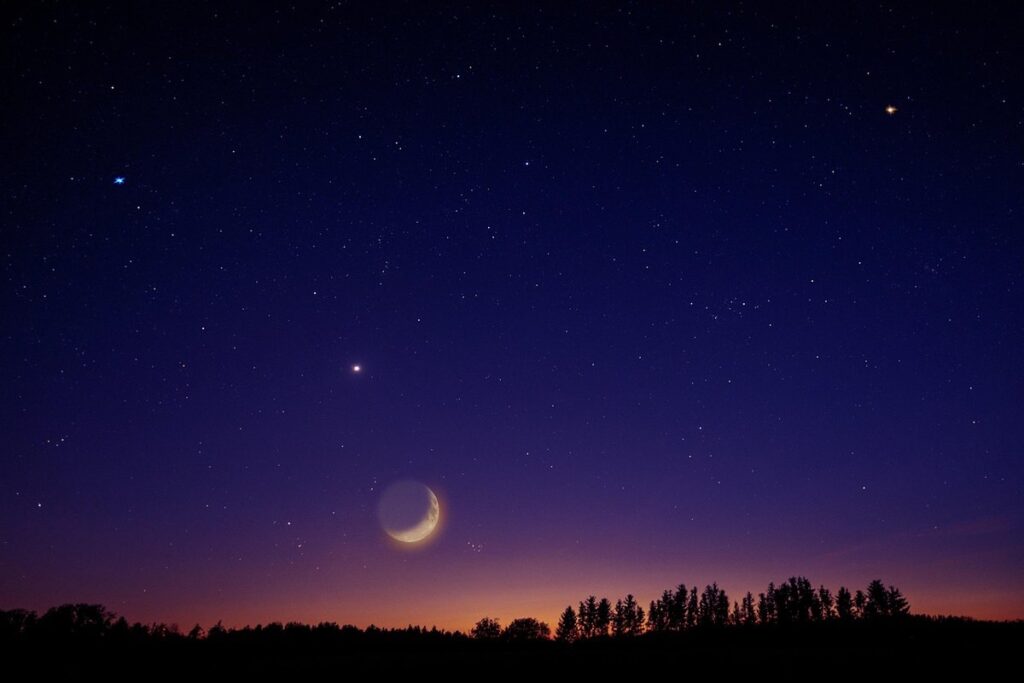
Understanding Venus Visibility
Venus is often difficult to spot due to its close proximity to the sun, which makes it tricky for stargazers to catch a glimpse of it in the sky. In this section, we’ll explore why visibility matters and how to increase your chances of spotting Venus.
Factors Affecting Visibility
The visibility of Venus from Earth is influenced by a combination of atmospheric and astronomical factors. The most significant factor affecting visibility is the planet’s proximity to Earth. When Venus is at its closest point, known as perigee, it appears larger and brighter in the sky. Conversely, when it reaches its farthest point, known as apogee, it appears smaller and dimmer.
Atmospheric conditions also play a crucial role in determining visibility. Air pollution, cloud cover, and humidity can all reduce the planet’s apparent brightness, making it harder to spot. In particular, observing Venus during periods of high humidity or when there are aerosols in the air can be challenging due to scattering effects that diminish its light.
Other astronomical factors come into play as well. The phase of the moon can impact visibility, with a full moon potentially washing out Venus’s brightness. Additionally, observations made from locations with high levels of light pollution will have reduced success rates compared to those from dark-sky preserves or remote areas.
Best Time for Observation
To spot Venus at its best, consider the optimal seasons for observation. In the Northern Hemisphere, winter months (December to February) and summer months (June to August) offer clear skies and minimal light pollution. For observers in the Southern Hemisphere, the opposite applies: June to August and December to February are the prime times.
In terms of time of day, Venus is most visible in the early morning hours after sunset or late evening hours before sunrise. This allows you to observe the planet when it’s highest in the sky and less affected by atmospheric distortion.
Weather conditions also play a crucial role in spotting Venus. Avoid observing during periods of high humidity, fog, or heavy cloud cover, as these can obscure the view. Instead, opt for clear, crisp nights with minimal moonlight interference. A new moon phase is ideal, as it provides an unobstructed view of the planet.
To maximize your chances of spotting Venus, plan your observations around these optimal seasons and conditions. Keep in mind that even on a clear night, atmospheric conditions can still impact visibility. Be prepared to adapt your viewing schedule according to local weather forecasts and planetary positions.
How to Locate Venus in the Night Sky
To spot Venus, you’ll need to know exactly when and where to look, so let’s cover the basics of locating it in the night sky. We’ll go over some essential tips for finding this bright planet.
Identifying Venus by Brightness
To recognize Venus as a bright morning or evening star, look for its exceptional luminosity. As the brightest planet in our solar system, Venus can outshine many stars and even some of the brighter planets. When Venus is at its peak brightness, it can appear up to 50 times more luminous than the full moon.
In the morning sky, a bright white or yellowish star near the horizon could be Venus. Be aware that this planet’s appearance changes over time due to its elliptical orbit and varying distance from Earth. When Venus is at its closest point (known as perigee), it can appear even brighter in the night sky.
To make identification easier, compare the brightness of nearby stars or planets to Venus. If a star appears noticeably dimmer compared to another object near the horizon, it might be Venus. Consider consulting a planetarium software or mobile app that can provide real-time information about celestial objects and their visibility for your location.
Using Planets and Stars for Reference
Using nearby celestial bodies like Jupiter, Mars, and constellations like Orion for navigation can be a useful technique when trying to locate Venus in the night sky. When these planets and stars are visible, they often form recognizable patterns that can serve as landmarks for finding Venus.
For example, during the summer months in the Northern Hemisphere, Jupiter is often visible in the east around 9 PM. If you know where to find Jupiter, you can use it as a reference point to locate Venus, which typically appears higher in the sky and slightly to the left of the gas giant. Similarly, the constellation Orion is another useful guide for finding Venus, especially during its most prominent months from December to February.
To apply this technique effectively, try identifying the position of these planets and constellations on a clear night when they are visible. Once you have a mental map of their locations, use them as reference points to locate Venus. This can be particularly helpful if you’re new to astronomy or don’t have a star chart handy.
Phases of Venus: A Guide
As you plan to spot Venus in the night sky, understanding its phases is crucial for accurate identification and viewing. This guide will walk you through the main phases of Venus and how they affect visibility.
New Moon and Crescent Stages
In the new moon and crescent stages of Venus’ visibility, the planet emerges from its conjunction with the Sun. This period is characterized by a gradual increase in brightness as the Earth’s rotation positions Venus at an angle that allows it to reflect more sunlight towards our planet. At this stage, Venus appears as a thin crescent, often described as a “sliver” of light on the western horizon after sunset.
As the new moon and crescent stages progress, you can observe Venus with the naked eye or binoculars about 30-40 minutes after sunset. The best time to spot it is when Venus is about 10-15° above the horizon, as this allows for a clear view without excessive sky glare. Keep in mind that the precise timing depends on your location and the planet’s position in its orbit.
During these early stages, you may notice variations in brightness due to atmospheric conditions or the presence of other celestial objects nearby. To enhance your viewing experience, try observing Venus when it is positioned near bright stars or planets that can serve as reference points for orientation. With patience and attention to timing, you’ll be able to witness Venus’ gradual transformation from a thin crescent into a fully illuminated disk in its later stages.
Full Moon and Gibbous Stages
As Venus approaches opposition and moves closer to Earth, its brightness increases. This trend continues until it reaches full moon phase, where the planet is at its most luminous. One of the key features of a full moon is that the entire illuminated side of the planet is facing the observer on Earth.
During this time, the reflected sunlight makes Venus a challenging object to observe due to its increased brightness and proximity to the Sun in the sky. Observers may need to use specialized filters or viewing techniques to safely gaze at the planet without causing eye damage.
In the days leading up to full moon, Venus will begin to take on a gibbous shape, appearing more than half-illuminated but not yet fully round. This is due to its continued movement towards opposition and its increasing brightness. To observe these phases, it’s essential to check astronomical tables or use planetarium software to determine the exact timing of each phase.
A good rule of thumb for observing Venus during the full moon and gibbous stages is to start looking in the late afternoon or early evening, when the sky has sufficiently darkened but the Sun is still relatively high. This allows observers to take advantage of the increased brightness while minimizing eye safety risks.
Observing Venus Through a Telescope or Binoculars
Want to spot Venus up close? This section will walk you through how to observe our brilliant neighbor using a telescope or binoculars.
Preparing Your Equipment
Before you start observing Venus through a telescope or binoculars, it’s essential to ensure your equipment is set up for optimal viewing. Begin by choosing a stable and level surface for your telescope or binoculars. This will help prevent any shaky images or wobbly views.
Next, check the magnification power of your telescope or binoculars. For observing Venus, a lower to moderate magnification (around 50-100x) is recommended. Higher magnifications can create a grainy or distorted image. If you’re using a telescope with interchangeable eyepieces, try a 10mm or 20mm eyepiece for a better view.
Make sure your observational tools are clean and free of dust or debris, as this can affect the quality of the image. Use a soft cloth to wipe down the lenses or objective lens. If you’re using binoculars, ensure they’re properly adjusted for your eyesight by moving the eyecups up or down until you see a clear view.
For telescopes, check that the focuser is securely locked in place and adjust it if necessary. This will help maintain focus on Venus throughout the observation session.
Enhancing Your Viewing Experience
To get the most out of viewing Venus through a telescope or binoculars, consider using a filter. A solar filter is essential for safe observation, as it reduces the intense brightness and prevents damage to your eyes. You can also use a moon filter or a neutral density filter to enhance detail and contrast. These filters work by adjusting the amount of light that reaches your eyepiece.
Adjusting magnification can also improve your viewing experience. A high magnification can reveal subtle details, but it may not be necessary for observing Venus. Typically, a 100-150x magnification is sufficient for getting a clear view of the planet’s phases and features. However, if you’re trying to observe surface details or atmospheric phenomena, higher magnifications (200-300x) might be required.
When choosing the right magnification, consider the stability of your telescope or binoculars and the quality of the optics. A stable platform is crucial for avoiding shake and blur. Additionally, check the planet’s proximity to other bright objects in the sky to avoid overexposure. By experimenting with different filters and magnifications, you can find the optimal settings for viewing Venus in greater detail.
Historical Significance of Venus Visibility
For centuries, astronomers and stargazers have been fascinated by the fleeting appearances of Venus in our night sky. This section examines the significance of these rare alignments from a historical perspective.
Ancient Observations and Myths
Ancient civilizations were fascinated by Venus’ unique visibility patterns and often associated them with mythological and spiritual significance. In ancient Mesopotamia, Venus was revered as Ishtar, the goddess of love and fertility, whose appearances in the sky were believed to signal changes in the seasons and agricultural cycles. Similarly, in ancient Greece, Venus was identified with Aphrodite, and her visible phases were seen as connected to the rhythms of nature.
In many cultures, Venus’ disappearance from view for extended periods was interpreted as a sign of divine displeasure or impending disaster. For example, the ancient Sumerians believed that when Venus was not visible in the morning sky, it signaled a period of famine and drought. Conversely, its reappearance was celebrated with festivals and rituals.
The tracking of Venus’ cycles by ancient astronomers also had practical applications for agriculture and trade. By monitoring Venus’ visibility patterns, early civilizations could plan planting and harvesting seasons, as well as navigate celestial events that influenced the tides and weather.
Cultural Associations with the Planet
In many ancient cultures, Venus was considered a symbol of love and beauty. In ancient Greece, it was associated with Aphrodite, while in Rome, it was linked to Venus herself. The planet’s bright appearance in the morning sky led some cultures to believe that it signaled the return of spring or new life. For example, in Mesopotamia, Venus was thought to represent Ishtar, a goddess of fertility and love.
In other cultures, Venus held different connotations. In ancient China, it was associated with the element of fire and seen as a symbol of passion and energy. The Incas believed that Venus was the embodiment of their god Inti, who represented the sun and its life-giving power.
Some cultures also saw Venus as a harbinger of bad luck or disaster. For example, in medieval Europe, the planet’s appearance was sometimes linked to omens of war or disease. This varied symbolism highlights the complex and multifaceted nature of human perception and interpretation of celestial bodies like Venus.
Understanding these cultural associations can provide insight into why ancient civilizations often tracked Venus’ movements with great care, recognizing its significance beyond mere astronomical interest.
Tips for Maximizing Your Chances to See Venus
To increase your chances of spotting Venus, timing is everything, and understanding its position relative to Earth makes all the difference in planning your stargazing sessions.
Staying Up-to-Date on Sky Events
To stay up-to-date on sky events and maximize your chances of seeing Venus, it’s essential to leverage online resources. Start by downloading a planetarium app like Sky Map or Stellarium Mobile, which can provide real-time information on planetary positions and visibility. You can also join astronomy forums such as Reddit’s r/Astronomy or Stargazer Forum, where enthusiasts share their knowledge and observations.
Another valuable resource is the United States Naval Observatory’s Data Services website, which offers a wealth of astronomical data, including solar system body positions and rise/set times. By using these tools, you can plan your viewing sessions according to Venus’ optimal visibility periods. For instance, during opposition, when Earth lies between the Sun and Venus, the planet is at its brightest in the sky.
Regularly check NASA’s website or social media channels for announcements about planetary alignments and celestial events, which often coincide with Venus’ appearance. By staying informed through these online platforms, you can make the most of clear skies and increase your chances of spotting Venus in the night sky.
Making the Most of Clear Skies
When you have a clear sky and optimal viewing conditions, it’s essential to make the most of these favorable circumstances. Begin by checking the planetary alignment for the night you plan to observe Venus. A favorable conjunction with bright planets or stars can enhance its visibility. You can use planetarium software or mobile apps like Sky Map to determine the best viewing times.
Plan your observation session during the early evening when the sky is dark enough, but not yet fully obscured by moonlight. This period typically lasts from 30 minutes to an hour after sunset, depending on your location’s latitude and time of year. Be prepared for the possibility that clouds may develop later in the night, so have a backup plan or be prepared to observe another evening.
Keep an eye on weather forecasts and sky conditions before heading out to observe Venus. A clear sky can quickly turn cloudy due to unexpected weather patterns, so it’s crucial to stay informed about any changes in the forecast. By combining good timing with optimal viewing conditions, you’ll increase your chances of spotting Venus in the night sky.
Frequently Asked Questions
Can You See Venus During Daytime If It’s Not at Opposition?
Yes, it is possible to see Venus during the day if you know where to look. However, it will be much fainter than when viewed in the evening or morning. To spot it, use a binoculars or a telescope with proper magnification and adjust your settings for daylight viewing. Be aware that atmospheric conditions can affect visibility.
How Do You Know When Venus Is At Its Highest Point in the Sky?
To determine when Venus is at its highest point, observe its position relative to nearby constellations or other celestial bodies. As Venus moves across the sky, it will reach a zenith angle of around 90 degrees from the horizon, indicating its highest point. Use online resources or astronomy apps to track Venus’ position and plan your observations accordingly.
Is It Necessary to Get Specialized Equipment to Observe Venus?
While specialized equipment like telescopes can enhance your viewing experience, they are not always necessary. Binoculars or even a good pair of eyes can be sufficient for observing Venus during optimal viewing times. However, using proper equipment with filters and adjusted magnification can improve visibility, especially in urban areas or when the planet is at low altitudes.
What Happens If You Miss Your Scheduled Viewing Time Due to Weather Conditions?
If you miss your scheduled viewing time due to inclement weather, don’t worry – there are usually multiple opportunities throughout the year to observe Venus. Keep an eye on astronomy forums, online resources, or apps for updates on celestial events and planetary positions. Plan your next attempt during a favorable weather window, taking note of optimal viewing times and conditions.
Can You Use a Smartphone App to Track Venus’ Visibility in Real-Time?
Yes, there are numerous smartphone apps available that can help you track Venus’ visibility in real-time. Many astronomy apps offer features like planet tracking, sky maps, and alerts for celestial events. Download an app compatible with your location and device, and use it to stay updated on the best times and conditions for viewing Venus.