
Birds are known for their melodious songs, but have you ever wondered why they sing in the first place? It’s not just a pleasant noise to fill the air; birds use their songs to communicate with each other, and it plays a crucial role in their lives. By singing, birds can attract potential mates, defend their territories from rival birds, and even warn others of predators lurking nearby. But human activities are also impacting their ability to sing effectively – everything from urban noise pollution to climate change is affecting the complex communication systems of our feathered friends. In this article, you’ll learn about the various ways in which birds use song, and how human actions are influencing their behavior. By the time you finish reading, you’ll have a better understanding of why birds sing and what it means for their survival.
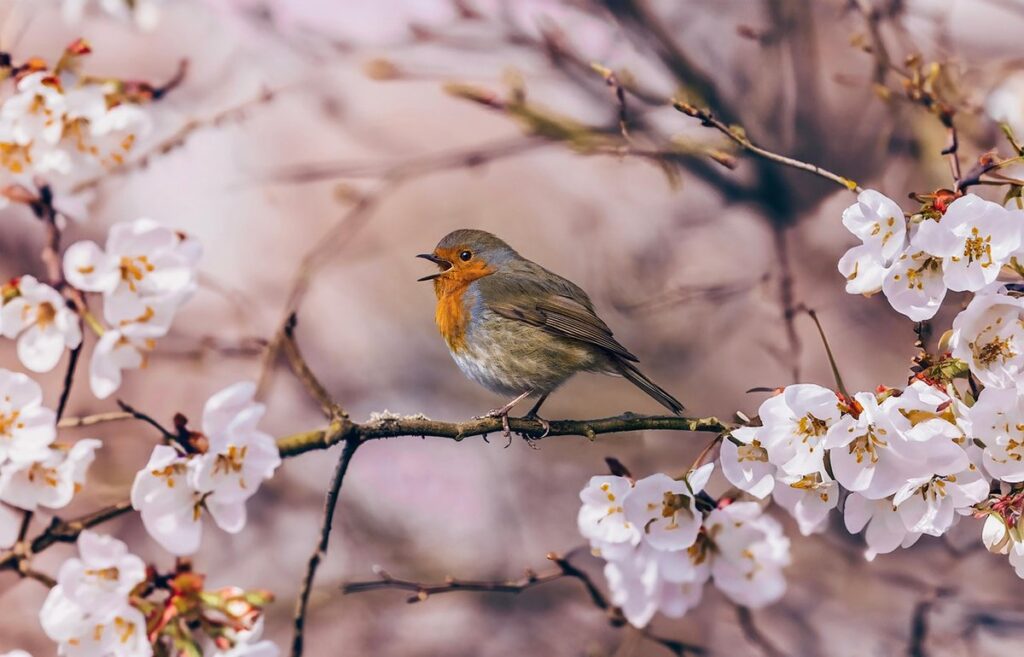
The Purpose of Birdsong
Birds sing for a variety of reasons, but at its core, each species’ unique song serves a specific purpose. Understanding these motivations can help us appreciate their beautiful melodies even more.
Attracting a Mate and Reproductive Success
When a bird sings, it’s not just expressing itself; it’s also advertising its genetic quality and fitness to potential mates. By showcasing its song, a male bird can demonstrate its overall health, strength, and reproductive potential. In many species, the complexity and beauty of a bird’s song are directly linked to its genetic makeup.
In some cases, birds will even modify their songs in response to changes in their environment or social status. For example, a young male may sing with less intensity than an older, more experienced male, as it takes time for its vocal cords and syrinx to mature fully. By doing so, the younger bird signals that it’s still developing and not yet ready to compete for a mate.
Female birds often respond positively to songs that convey high-quality traits such as nutritional status or immune function. In some species, females will even prefer songs with specific characteristics over others, indicating their individual preferences play a role in selecting a mate.
Territorial Defense and Signaling
Birds sing to defend their territories from other birds, and songs play a crucial role in territorial signaling. This type of singing helps birds maintain their territory boundaries by warning off potential intruders and advertising their presence to other birds in the area.
When a bird sings its song, it’s sending a signal that says, “This is my territory, stay away.” This message is often accompanied by visual displays such as posturing, flashing bright plumage, or even aggression. By broadcasting this information through song, birds can deter competitors and predators from entering their territory.
In some species, songs can be so complex and specific to the individual that they serve as a unique identifier. For example, the Northern Cardinal’s song is often described as a series of whistled phrases that are distinct to each bird. When another cardinal hears this song, it knows exactly who’s singing and whether it should stay away or not.
By understanding the role of songs in territorial defense, we can appreciate the importance of maintaining healthy territories for birds. This knowledge can also inform conservation efforts, such as habitat preservation and management strategies that take into account the complex social dynamics between bird species.
Warning Calls and Alarm Signals
Some bird species use specific calls or songs as warning signals for potential threats, such as predators. The types of alarm calls vary across different bird groups and are often tailored to convey urgency and alertness.
For example, some birds, like the Northern Cardinal, emit a sharp, high-pitched whistle when they spot a predator. In contrast, the Western Meadowlark produces a distinctive, rising “rollercoaster” sound when it senses danger. These distinct alarm calls serve as signals for other birds in the area to take evasive action.
Some species have even developed complex warning systems that involve multiple sounds and visual cues. For instance, the Clark’s Nutcracker uses a combination of loud, sharp calls and aerial displays to alert its flock members to potential threats. By recognizing these specific alarm calls, individual birds can respond quickly to protect themselves and their social groups.
Birdwatchers can take note of the different warning calls used by various bird species in their areas. By becoming familiar with these unique signals, they can better appreciate the complex communication systems employed by birds and gain a deeper understanding of their behavior.
The Mechanisms Behind Birdsong
Birds sing for a reason, but what drives this complex behavior? In this next part of our exploration, we’ll take a closer look at the intricate mechanisms behind their melodic songs.
Brain Structure and Function
The song system, a complex network of brain regions, plays a crucial role in birdsong production. This system includes the anterior forebrain, the vocal motor nucleus, and the robustus archistriatalis. These areas work together to generate the intricate patterns and melodies characteristic of bird songs. The syrinx, located at the base of the trachea, is responsible for producing sound waves when air passes through it.
Research has shown that different brain regions are involved in various aspects of song production. For example, the anterior forebrain is responsible for learning and memory, while the vocal motor nucleus controls the muscles used to produce sound. The syrinx itself is made up of unique muscle structures that allow birds to produce a wide range of frequencies.
Studies have also identified specific neural pathways that are activated when birds sing. These pathways include the song system’s connections to other brain regions, such as the auditory cortex and the motor cortex. This complex interplay between different brain areas allows birds to produce songs that are both melodious and meaningful. By understanding these neural mechanisms, we can gain a deeper appreciation for the complexity of bird communication.
Hormonal Influences on Song Development
During puberty, birds undergo significant hormonal changes that trigger the development of their songs. This process is crucial for many species, as it helps them establish territorial boundaries and attract a mate. In songbirds, such as sparrows and finches, testosterone levels surge during this period, stimulating the growth of vocal muscles and the formation of song patterns.
Research has shown that hormone-mediated changes in brain structure also play a key role in song development. For example, studies have found that the volume of the syrinx, the avian equivalent of the human larynx, increases in response to hormonal fluctuations during puberty. This increase in syrinx size enables birds to produce more complex and nuanced songs.
The specific hormone responsible for stimulating song development is thought to be testosterone, which promotes the growth of vocal muscles and the formation of song patterns. However, other hormones, such as estrogen and progesterone, also contribute to this process. The precise interplay between these hormones remains an area of ongoing research and debate.
Evolutionary Pressures Shaping Birdsong
Birds sing for a multitude of reasons, but have you ever wondered what drives these complex vocalizations? Let’s examine how evolutionary pressures shape the songs of different bird species.
Adaptation to Environment and Climate
Birds have adapted their songs to suit various environments and climates. For example, birds living near coastlines tend to sing higher-pitched melodies, which can travel further across water. In contrast, birds inhabiting dense forests often produce lower-frequency calls that can cut through the ambient noise.
In tropical regions, where vegetation is lush and trees are closely packed, some bird species have developed complex song structures. These songs involve a mix of melodic phrases and rhythmic patterns, which help these birds to establish their territory and attract mates in a crowded environment.
Desert-dwelling birds, on the other hand, often use simpler melodies or even mimicry to communicate. This is likely due to the fact that sound travels more easily across open spaces with minimal obstacles.
Different bird species have also developed distinct vocal characteristics based on local climate conditions. For instance, some Arctic birds sing during the short summer season when food is scarce and breeding opportunities are limited. In warmer climates, many birds sing throughout the year as a means of maintaining social bonds and establishing dominance hierarchies.
Competition for Resources and Mating Opportunities
In many bird species, song complexity plays a crucial role in mate choice. A bird’s ability to produce intricate and varied songs can signal its overall health, fitness, and genetic quality to potential mates. This is because a complex song requires significant cognitive effort and vocal muscle development, traits that are often linked to high reproductive success.
Some studies have shown that males with more complex songs tend to attract higher-quality females and sire offspring with better survival rates. For example, research on song sparrows found that males with longer, more varied songs were preferred by females and had a greater mating success. Conversely, males with simpler songs often struggled to establish territories and secure mates.
The competition for resources also drives the evolution of bird songs. In areas where food is scarce or unpredictable, birds may focus their energy on producing complex songs as a means of advertising their territory’s quality and attracting potential mates. This highlights the intricate interplay between resource competition, mate choice, and song complexity in shaping the evolution of bird vocalizations.
Cultural Transmission of Birdsong
Birds learn songs from their parents, and researchers have discovered that some species even mimic human voices, revealing a fascinating side to their vocal abilities. This unique form of cultural transmission is just one factor that contributes to a bird’s song.
Learning and Imitation
Young birds learn to sing by imitating their parents and other members of their social group. This process, known as cultural transmission, is not unique to birds – many mammals and even some species of fish exhibit similar behaviors. In songbirds, for example, juveniles often begin by listening to and mimicking the songs of adults in their vicinity.
One key aspect of this learning process is its reliance on auditory memory. Young birds must be able to recall and reproduce complex melodies with precision, which requires an impressive capacity for auditory storage and retrieval. Research has shown that songbirds’ brains are specially adapted to handle these demands, with areas dedicated to processing and storing musical information.
The role of social interaction in shaping young birds’ songs cannot be overstated. In many species, including some species of finches and sparrows, juveniles will often practice singing in the presence of adults or other juveniles. This feedback loop allows them to refine their skills and adjust their melodies according to the preferences of those around them.
This cultural transmission can lead to fascinating regional differences within a single species. For example, the song of the northern cardinal is distinct from that of its southern counterpart due to local variations in pitch and melody. By learning to sing from others, young birds not only develop a unique voice but also become embedded in their social context.
The Impact of Human Activities on Birdsong
Human activities have a profound impact on birdsong, affecting their volume, frequency, and even the types of songs they sing. From urbanization to climate change, these effects are far-reaching and warrant closer examination.
Noise Pollution and Habitat Destruction
Human activities like noise pollution and habitat destruction can have a devastating impact on bird communication systems. For instance, construction sites, traffic, and industrial facilities can generate loud noises that mask birds’ songs, making it difficult for them to communicate with each other. This disruption can affect song patterns, as birds may adjust their vocalizations to be heard above the background noise.
Habitat destruction is another major concern. As forests are cleared or fragmented, birds lose their natural habitats and the resources they need to survive. This can lead to a decline in bird populations, making it harder for them to maintain complex communication systems. For example, the removal of song posts – trees or shrubs used by birds as perches to sing from – can disrupt song patterns and make it more challenging for birds to defend their territories.
The impact of human activities on bird vocalizations is not limited to noise pollution and habitat destruction. Climate change also plays a significant role in altering bird songs. As temperatures rise, some bird species are shifting their ranges or adjusting their migration patterns, which can lead to changes in their song patterns. For instance, the song of the Northern Cardinal has been observed to be shorter and more repetitive during periods of high temperatures.
To mitigate these effects, conservation efforts focus on protecting and restoring habitats, reducing noise pollution, and promoting sustainable land-use practices. By doing so, we can help preserve bird communication systems and maintain healthy populations. For example, creating bird-friendly gardens or installing noise-reducing materials in urban areas can make a significant difference.
Conclusion: Why Birds Sing Matters
As we’ve explored why birds sing, let’s now discuss what it means for you and your relationship with these fascinating creatures. Understanding their melodies can deepen our appreciation of nature.
Conservation Implications
Birds’ unique songs play a crucial role in species identification. Many bird species have distinct vocal characteristics, such as pitch, tone, and frequency, which can be used to distinguish between them. For example, the Northern Cardinal’s clear, whistled song is unmistakable, while the Red-winged Blackbird’s melodic song features a distinctive descending phrase. By recognizing these vocal signatures, conservationists can more accurately identify species in the wild, monitor populations, and track changes over time.
Habitat preservation is another critical area where understanding birdsong comes into play. Birds often use specific songs to advertise their territory, revealing valuable information about habitat quality and availability. For instance, if a bird’s song is absent or altered due to environmental degradation, it may indicate that the surrounding habitat has become inhospitable. By analyzing birdsong patterns, researchers can gain insights into ecosystem health and identify areas where conservation efforts are needed.
Mitigating climate change also benefits from understanding birdsong. As temperatures rise and weather patterns shift, some bird species adapt by changing their songs or migrating to new habitats. By studying these changes, scientists can better understand the impacts of climate change on ecosystems and develop targeted conservation strategies. For example, researchers may use acoustic monitoring devices to track changes in bird populations and adjust management plans accordingly.
Future Research Directions
Investigating the neural basis of song learning and production could reveal new insights into the cognitive processes underlying bird vocalization. Researchers have made significant strides in understanding brain structure and function, but more work is needed to elucidate how these mechanisms contribute to individual birds’ unique songs.
Comparative studies examining the evolutionary pressures driving changes in bird songs across different species would provide valuable information on how these traits adapt to environmental conditions. For example, exploring how song complexity or diversity relates to habitat quality or predation pressure could inform conservation efforts.
Another promising area of research involves analyzing the role of cultural transmission in shaping bird communication. Investigating how birds acquire and modify their songs through social learning could reveal novel strategies for addressing noise pollution or habitat destruction.
Some potential avenues for future investigation include:
- Using advanced neuroimaging techniques to visualize brain activity during song production
- Conducting field studies on the effects of environmental changes on bird song patterns
- Developing computational models to simulate the emergence of complex song structures through social learning
Frequently Asked Questions
Can I Use Birdsong to Identify Species in My Area?
Yes. By learning the distinct songs of birds in your area, you can use this knowledge for species identification and conservation efforts. This involves familiarizing yourself with local bird vocalizations and developing an ear for their unique characteristics.
How Do I Protect Bird Communication Systems from Noise Pollution?
Reducing noise pollution requires a multi-faceted approach. Start by identifying sources of noise in your area, such as traffic or construction sites. Then, consider implementing measures to mitigate these noises, like installing sound barriers or using noise-reducing materials for construction projects.
What If I Live Near a Bird Sanctuary and Want to Support the Birds’ Singing Activities?
Supporting bird sanctuaries can involve various activities. First, learn about the sanctuary’s conservation efforts and how you can contribute. You might volunteer your time, donate resources, or spread awareness about the importance of protecting these habitats.
Can I Teach Myself to Recognize Bird Songs by Listening to Audio Recordings?
Yes. While experience is key in recognizing bird songs, listening to audio recordings can be a good starting point. Begin with common species in your area and gradually expand your knowledge as you become more familiar with their vocalizations.