
Zircon crystals have long been a subject of fascination for geologists, gem enthusiasts, and scientists alike. These stunning minerals come with a multitude of characteristics that make them highly sought after in various industries. Not only do they possess exceptional hardness and durability, but their unique optical properties also set them apart from other crystals. With its range of colors, including vibrant blues, greens, and golds, it’s no wonder zircon crystals have become a prized gemstone for jewelry making. From the industrial applications of zirconium oxide to its significance in scientific research, this versatile crystal has proven itself invaluable across multiple fields. In this article, we’ll delve into the fascinating world of zircon crystals, exploring their properties, uses, formation, and identification processes.
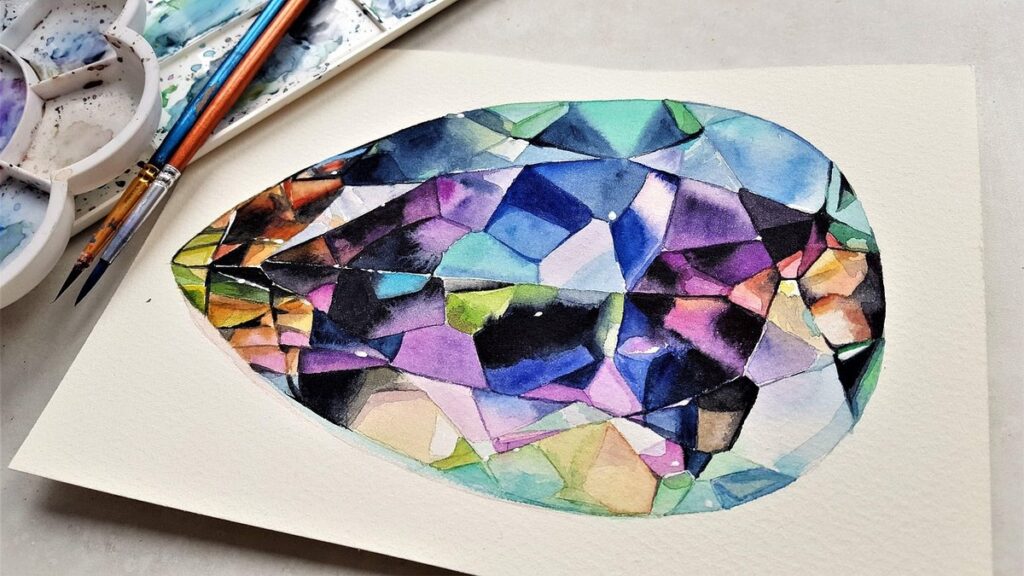
What is a Zircon Crystal?
So, you’re curious about what makes zircon crystals so special? Let’s start by exploring their unique definition and characteristics.
Definition and Composition
At its core, a zircon crystal is a naturally occurring mineral with a rich composition that sets it apart from other gemstones. The chemical formula for zircon is ZrSiO4, which indicates the presence of zirconium (Zr), silicon (Si), and oxygen (O) atoms. This unique combination gives zircon its distinctive properties and appearance. In terms of crystal structure, zircon belongs to the tetragonal system, characterized by a four-fold symmetry. Its mineral group classification is nesosilicates, which refers to isolated silicate ions in the crystal lattice.
This composition and structure contribute to zircon’s remarkable durability, with a Mohs hardness rating of 7-7.5. The presence of different elements, such as iron, titanium, or uranium, can also influence the color and clarity of zircon crystals. For instance, chromium-rich zircons may display vibrant green hues, while those with high levels of cerium may exhibit a range of colors from yellow to red. By understanding the definition and composition of zircon crystals, you’ll appreciate their intricate beauty and versatility in various applications.
History of Discovery and Use
Zircon crystals have been a source of fascination for thousands of years, with early records of their discovery dating back to ancient civilizations. In fact, the word “zircon” is derived from the Arabic term “zararna,” which means “gold-bearing.” It’s no wonder that zircon was highly prized in jewelry and adornments due to its ability to resemble diamonds.
In many cultures, zircon has been imbued with spiritual significance, often associated with good fortune and prosperity. In ancient Rome, for example, zircons were used as a symbol of wealth and status. Similarly, in India, zircon is believed to possess mystical powers that can bring good luck and protect against evil spirits.
Today, zircon continues to be used in high-end jewelry due to its durability and brilliance. However, its significance extends beyond its aesthetic value. Zircons have also played a crucial role in geology, helping scientists understand the Earth’s history and evolution. By studying the composition of zircons, researchers can gain insights into the planet’s formation and development over millions of years.
Properties and Characteristics
Let’s dive into the fascinating properties of zircon crystals, including their unique characteristics and physical attributes that make them truly one-of-a-kind. We’ll explore what makes each crystal so distinctive.
Physical Properties
Zircon crystals are known for their impressive physical properties, which set them apart from other gemstones. When it comes to hardness, zircons rank between 6 and 7 on the Mohs scale, making them relatively durable and resistant to scratches. However, this also means that they can be prone to wear and tear with heavy use.
In terms of density, zircon crystals have a specific gravity of around 4-4.5 g/cm3, which is significantly higher than most other gemstones. This high density is one of the reasons why zircons are often used in jewelry making, as they can add a substantial weight to pieces without compromising their aesthetic appeal.
When it comes to luster, zircon crystals typically display an adamantine or vitreous luster, which means they have a glassy or diamond-like appearance. This is especially true for high-quality zircons that are free from inclusions and imperfections.
Zircon crystals also exhibit a pronounced cleavage pattern, with the primary cleavage occurring along the basal pinacoid. This can sometimes lead to problems during cutting and polishing processes, as the crystal may split or break if not handled carefully. However, experienced lapidaries know how to work around this issue by using specialized techniques and tools.
Crystal form is another defining characteristic of zircon crystals, with some species exhibiting a trigonal (hexagonal) prismatic habit while others display a tetragonal or monoclinic shape. The unique crystal structure of zircons can affect their appearance and brilliance, making each stone truly one-of-a-kind.
Optical Properties
When it comes to optical properties, zircon crystals are truly fascinating. One of the most notable aspects of zircon’s optical properties is its refractive index, which ranges from 1.78 to 2.15. This means that light passes through the crystal at a slower pace than in air, giving it a unique ability to bend and refract light.
But what really sets zircon apart is its exceptional dispersion, with a notable increase in refractive index as the wavelength of light decreases. In other words, zircon has a high degree of color dispersion, which makes it appear more vivid and vibrant under different lighting conditions. This is especially evident in its ability to exhibit a range of colors from yellow to red under UV illumination.
Interestingly, some zircons also exhibit fluorescence under UV radiation, emitting a soft blue or white glow. This property has led to the use of zircon in various applications, including jewelry and decorative objects that showcase its unique luminescent properties. When searching for high-quality zircon crystals, look for those with high refractive index values (around 2.0) and vibrant colors – these will be the most impressive in terms of optical properties.
Chemical Properties
Zircon crystals exhibit an impressive array of chemical properties that make them highly desirable for various applications. One of their most striking characteristics is their exceptional resistance to heat. Zirconium dioxide (ZrO2), the primary component of zircon, has a melting point of around 2715°C, making it one of the highest-melting-point oxides known. This property renders zircon highly suitable for high-temperature applications, such as foundry crucibles and furnace linings.
In addition to its heat resistance, zircon also exhibits remarkable stability in the face of acidity and alkalinity. When exposed to acidic or basic environments, zircon tends to resist chemical alteration, retaining its crystalline structure and chemical composition. This property allows zircon to maintain its integrity even in conditions where other materials might degrade.
This stability has significant implications for industries such as ceramics and refractory production, where zircon is often used as an additive to enhance the performance of these materials.
Uses of Zircon Crystals
Zircon crystals are incredibly versatile, and their uses extend far beyond ornamental purposes. From electronics to jewelry, we’ll explore some of the most interesting applications of these remarkable crystals.
Jewelry and Gemstone Industry
In the world of jewelry, zircon crystals have gained significant popularity due to their unique characteristics and affordability. One of the most notable uses of zircon is as a diamond simulant, often marketed under the name “CZ” or “simulated diamond.” This is because zircon has similar refractive properties to diamonds, making it difficult for the naked eye to distinguish between the two.
However, zircon’s appeal extends beyond its ability to mimic diamonds. Its unique characteristics make it suitable for various types of jewelry, including earrings, pendants, and rings. For instance, zircon is often used in birthstone jewelry due to its vibrant colors, which are said to bring good fortune and prosperity. Some people also prefer zircon over diamonds because it’s more affordable and doesn’t carry the same emotional or investment burden.
When shopping for zircon jewelry, look for pieces that have been treated with care to enhance their color and brilliance. This can include heat treatment or irradiation processes that make the stone more radiant.
Industrial Applications
Zircon crystals have been exploited for their industrial applications due to their unique combination of physical and chemical properties. In ceramics, zircon is often used as a stabilizer and opacifier to improve durability and aesthetic appeal. For instance, it’s a key component in the production of ceramic tiles, sanitary ware, and technical porcelain.
In refractories, zirconium dioxide (ZrO2) is employed due to its high melting point and chemical inertness. This allows it to withstand extremely high temperatures, making it an essential material for blast furnaces, crucibles, and other high-temperature applications.
Another notable industrial application of zircon crystals is in abrasives. The mineral’s hardness, combined with its unique crystal structure, makes it a versatile abrasive medium for various industries. Zircon sand, specifically, is widely used in manufacturing processes that require a precise grind or polish, such as in the production of glass and ceramics.
Scientific Research and Applications
Zircon crystals have been extensively used in various scientific research fields, including geology, geochemistry, and materials science. Geologists rely on zircon to date rocks and reconstruct the Earth’s history. The crystal’s high resistance to weathering and ability to withstand extreme temperatures make it an ideal tool for studying ancient geological events. For instance, a team of researchers used zircon crystals to study the formation of the Earth’s crust during a major collision between two continents.
In geochemistry, zircon is used to analyze the chemical composition of rocks and minerals. Its unique crystal structure allows scientists to extract valuable information about the rock’s formation conditions. Materials scientists also utilize zircon in research related to advanced ceramics, nuclear fuels, and other high-performance materials. Zircon’s exceptional durability and resistance to corrosion make it an attractive material for developing new technologies.
The use of zircon crystals has greatly expanded our understanding of geological processes and the Earth’s history.
Formation and Occurrence
Zircon crystals have been forming on Earth for over 4.4 billion years, resulting from a variety of geological processes that still shape their occurrence today. Let’s explore these crucial factors!
Geological Processes
Zircon crystals are formed through complex geological processes that involve high-pressure and high-temperature conditions. These processes occur deep within the Earth’s mantle and crust, where rocks undergo intense metamorphism due to heat and pressure. One of the primary ways zircons form is through a process called partial melting, where rocks melt and release minerals such as zirconium into the magma.
This magma then cools and solidifies, causing the zirconium to precipitate out and form crystals. The high-pressure conditions in the Earth’s mantle also contribute to the formation of zircon crystals, allowing them to grow and develop their characteristic needle-like or prismatic shapes. In some cases, zircons may also form through magmatic activity, such as during volcanic eruptions, where magma is rapidly cooled and solidified.
The unique combination of high pressure and temperature conditions required for zircon formation explains why they are often found in association with other metamorphic minerals. The study of zircons has provided valuable insights into the Earth’s history, including information about past geological events and processes that have shaped our planet.
Mining and Extraction
Zircon is typically extracted from various geological formations through distinct mining and extraction methods. One of the primary sources of zircon is pegmatites – coarse-grained igneous rocks formed during the cooling process of magma deep within the Earth’s crust. Mining companies employ mechanical excavation techniques, such as drilling and blasting, to extract these rock formations.
Another significant source of zircon is alluvial deposits, which are created through the erosion and transportation of pre-existing rocks by water or wind. Zircon-rich sand and gravel from these sources can be extracted using dredging equipment or other types of heavy machinery.
The extraction process for zircon also involves separating it from other minerals present in the ore. This is typically achieved through a combination of physical separation techniques, such as sieving and flotation, and chemical processes like acid leaching. The end result is high-purity zircon crystals suitable for industrial applications.
Distribution and Abundance
Zircon crystals are found on all continents, but their distribution is not uniform. They are most abundant in metamorphic rocks of the Precambrian age, particularly in high-grade gneisses and schists. Australia, Africa, and Southeast Asia are among the regions with significant zircon deposits.
One of the largest zircon-producing countries is Australia, where it can be found in Western Australia’s Jack Hills region. The continent’s vast expanse of ancient crust has contributed to its rich zircon reserves. In contrast, some areas like Antarctica have limited or no zircon deposits due to geological history and tectonic activity.
The abundance of zircon varies significantly across regions. For instance, the Indian Shield is known for having high-grade metamorphic rocks with abundant zircon, whereas parts of North America have fewer zircon deposits. This uneven distribution can be attributed to factors like plate tectonics, weathering, and erosion over millions of years.
To appreciate the rarity of certain types of zircon, consider that a single zircon crystal can contain fragments from multiple ancient rocks.
Identification and Authentication
To accurately identify a zircon crystal, you’ll need to consider its appearance and properties, as well as any certification or documentation that comes with it. Let’s dive into these crucial steps together.
Visual Identification
When it comes to identifying zircon crystals, visual characteristics play a significant role. One of the most distinctive features of zircon is its crystal shape. Zircons can form in various shapes, including prismatic, tabular, and needle-like forms. However, some of the most prized varieties are those with rounded or octahedral crystal forms.
The color of zircon is also a crucial identifier. While zircons can exhibit a range of colors, including blue, yellow, brown, and red, it’s worth noting that high-quality zircons often display multiple colors, a phenomenon known as “color zoning.” This unique characteristic is particularly prized by collectors and gemstone enthusiasts.
In terms of clarity, zircons are known for their exceptional transparency. In fact, some varieties are among the most transparent crystals found in nature. However, it’s not uncommon to find zircons with inclusions or imperfections that affect their clarity. When evaluating a potential specimen, look for zircons with high luster and minimal inclusions.
When examining zircons, take note of any unique characteristics that set them apart from other crystals. For example, some varieties may display an “asterism” or star-like effect due to the presence of rutile needles. By paying attention to these visual identifiers, you can develop a keen eye for spotting high-quality zircon specimens.
Chemical and Physical Tests
Authenticating zircon crystals requires a combination of chemical and physical tests to ensure their legitimacy. One of the most effective methods is spectroscopy, which involves analyzing the crystal’s light absorption patterns using techniques like infrared (IR) or Raman spectroscopy. This can help identify the presence of specific impurities or defects within the crystal.
X-ray fluorescence (XRF) testing is another valuable tool for verifying zircon authenticity. XRF uses an X-ray beam to excite the atoms in the crystal, causing them to emit characteristic energy levels that can be measured and compared to a known reference spectrum. This test can help detect any signs of artificial irradiation or chemical alteration.
Hardness testing using the Mohs scale is also commonly employed for zircon identification. With a hardness rating of 6-7.5 on the Mohs scale, zircons are relatively durable but not scratch-resistant like some other minerals. Conducting a series of scratches on a sample’s surface can provide valuable information about its composition and purity.
It’s essential to note that no single test can guarantee authenticity; combining multiple methods is often necessary for accurate verification.
Conclusion
As you’ve learned about the unique properties and uses of zircon crystals, it’s time to summarize what we’ve discussed. Zircon crystals are one of the oldest minerals on Earth, formed over 4 billion years ago, and yet they remain widely used in various industries today. From their exceptional hardness and durability to their ability to withstand high temperatures, it’s clear why zircon is a valuable gemstone. As you consider adding zircon crystals to your collection or using them in a craft project, keep in mind that their rarity and value can impact the price.
When searching for zircon crystals, look for reputable sources and consider factors such as color, clarity, and cut. This will ensure you get the best quality crystal for your needs.
Frequently Asked Questions
Can I use zircon crystals for industrial applications without any prior experience?
No, it’s essential to have a good understanding of the properties and handling requirements of zirconium oxide before using it in industrial applications. Consult with an expert or conduct thorough research to ensure safe and effective implementation.
How do I determine the authenticity of a zircon crystal?
Verify the presence of zirconium (Zr) and silicon (Si) atoms through chemical analysis, such as spectroscopy or X-ray fluorescence. Also, examine the crystal’s optical properties, including its refractive index and dispersion.
Are there any specific safety precautions I should take when handling zircon crystals?
Yes, handle zircon crystals with care due to their hardness and potential toxicity. Wear protective gear, including gloves and eye protection, when cutting or polishing the crystals. Also, be aware of possible skin irritation from prolonged exposure.
Can I grow my own zircon crystal at home?
Growing zircon crystals requires controlled conditions, including high temperatures and specific chemical compositions. This is typically only feasible in a laboratory setting with specialized equipment. However, you can learn about zircon formation through scientific research or join gemstone growing communities for guidance.
How do I choose the right color of zircon crystal for jewelry making?
Select a zircon crystal that matches your desired aesthetic and complements the surrounding design elements. Consider factors like durability, hardness, and optical properties when choosing between different colors and types of zircon crystals.