
For vinyl enthusiasts, there’s nothing quite like the satisfaction of adding a new record to the collection, but it’s often followed by the daunting task of finding a place to store it. Cluttered record shelves and scattered albums can be a frustrating problem for many, but it doesn’t have to be that way. With a little creativity and know-how, you can create a custom storage solution that not only keeps your records organized but also showcases them in a beautiful and unique way. In this article, we’ll explore the world of DIY vinyl storage, from simple wooden crates to elaborate glass front cabinets, and discover the benefits of proper vinyl storage. By the end of this guide, you’ll be able to design and build your own custom storage solution that meets your needs and enhances your vinyl collection.
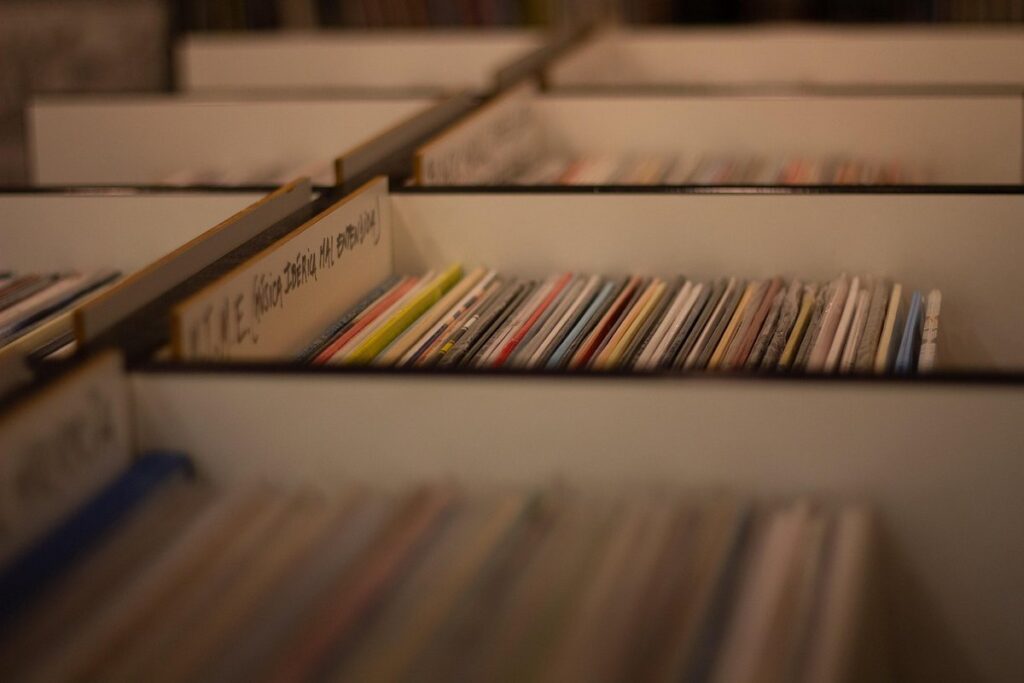
Understanding the Need for Vinyl Storage
As a vinyl collector, you’ve likely encountered the problem of disorganized records taking up valuable space. This section will explore the reasons why vinyl storage solutions are a must-have for any music enthusiast.
Benefits of Vinyl Storage
Proper storage of vinyl records helps preserve the music itself by protecting the records from warping, scratching, and other forms of damage that can occur when they’re handled or exposed to environmental stressors. A well-designed storage system can also keep your records organized, making it easier to find the one you want to listen to. Furthermore, vinyl storage solutions can add a touch of visual appeal to your home, with beautifully crafted wooden crates or decorative glass front cabinets showcasing your collection.
When stored properly, vinyl records can also last longer, with some estimates suggesting that a well-maintained record can last for 20-30 years or more. This is because storage helps regulate the temperature and humidity levels that can cause records to degrade. To maximize the benefits of vinyl storage, consider using acid-free storage materials and keeping your collection away from direct sunlight and moisture-prone areas. By investing in a good storage system, you can enjoy your vinyl collection for years to come. Regular cleaning and maintenance can also help extend the life of your records.
The Risks of Poor Vinyl Storage
Poor vinyl storage can lead to a range of problems, from minor scratches to irreparable damage. One of the most common issues is warping, which occurs when records are exposed to extreme temperatures or humidity. This can cause the vinyl to bend out of shape, making it unplayable. To avoid warping, store your records in a cool, dry environment with a consistent temperature between 60-70°F (15-21°C).
Another problem associated with poor storage is scratches. These can be caused by records coming into contact with each other, or with the storage container itself. To prevent scratches, use dividers or spacers to keep your records separated, and consider using a storage material with a smooth surface. For example, a wooden crate with a smooth finish can help prevent scratches.
In extreme cases, poor storage can even lead to the destruction of your records. For instance, if you store your vinyl in a humid environment, mold or mildew can form on the surface of the records, causing them to deteriorate. To prevent this, ensure that your storage area is well-ventilated and maintain a consistent humidity level.
Choosing the Right Vinyl Storage Materials
When it comes to building your dream DIY vinyl storage, selecting the right materials is crucial to ensure durability and protection for your precious records. We’ll guide you through the best materials to consider for a sturdy and stylish storage solution.
Overview of Common Materials
When it comes to choosing materials for your DIY vinyl storage project, you have a range of options to consider. Wood is a popular choice, offering a natural, aesthetic appeal that many music enthusiasts find desirable. However, it can be heavy and may require more maintenance than other materials. On the other hand, plastic storage solutions are lightweight and easy to clean, making them a great option for small spaces or for those who want a low-maintenance solution.
Fabric and cardboard storage solutions are also gaining popularity, particularly among those who value sustainability and eco-friendliness. Fabric storage solutions can be made from repurposed clothing or fabric scraps, reducing waste and minimizing environmental impact. Cardboard storage solutions, meanwhile, are inexpensive and can be easily customized to fit specific storage needs. Some music enthusiasts even opt for a combination of materials, using wood for the base and fabric for the storage compartments. Regardless of which material you choose, it’s essential to consider factors such as durability, maintenance, and aesthetic appeal when selecting the right materials for your DIY vinyl storage project.
Benefits and Drawbacks of Each Material
When choosing materials for your vinyl storage solutions, it’s essential to weigh the pros and cons of each option. MDF (Medium-Density Fiberboard) is a cost-effective choice, but its durability is limited, making it prone to scratches and dents. On the other hand, solid wood offers superior durability, but its higher price point may not fit every budget.
Plywood, another popular option, balances affordability with decent durability. However, its aesthetic appeal is often compromised by visible seams and a less polished finish. Acrylic, a modern and sleek material, excels in terms of visual appeal but can be more expensive than other options.
Consider the following factors when making your decision: the weight and size of your vinyl collection, the desired aesthetic, and your budget. For example, if you’re looking for a high-end, visually striking display, acrylic might be the way to go. However, if you’re on a tighter budget and prioritize durability, solid wood could be a better fit.
Specialty Materials for Vinyl Storage
When it comes to protecting and showcasing your vinyl collection, specialty materials can make a big difference. Vinyl-specific storage boxes and crates are designed to cradle your records in a way that ordinary storage containers can’t. These boxes often feature molded inserts that fit snugly around the record’s circumference, keeping them from slipping or getting scratched.
One popular option is the Acrylic Record Box, which uses a clear, rigid plastic to showcase the cover art while protecting the record itself. Another option is the Wooden Record Crate, which combines traditional craftsmanship with modern materials to create a beautiful and durable storage solution.
When shopping for specialty materials, consider the size and shape of your records, as well as the overall aesthetic you want to achieve in your storage space. For example, if you’re looking to display your rarest or most prized records, a clear storage box with a wooden base can add a touch of elegance to your room.
DIY Vinyl Storage Projects for Beginners
If you’re new to DIY vinyl storage, this section will guide you through simple and creative projects to get you started, from wall-mounted shelves to stylish crates.
Basic Wooden Crate Storage
For a simple and stylish DIY vinyl storage solution, consider using wooden crates. These crates can be easily assembled and decorated to create a unique storage space for your vinyl collection. Start by selecting crates that are sturdy and have a smooth surface. You’ll need at least three to four crates, depending on the size of your collection.
To assemble the crates, you’ll need to attach them to each other using hinges or screws. Make sure the crates are level and secure before adding your vinyl records. You can also add a lip to the top of each crate to prevent records from falling out. Once assembled, you can decorate the crates using paint, stain, or decoupage. This will not only protect the wood but also give your storage unit a personalized touch.
For a more rustic look, you can leave the crates unpainted and add a natural finish. Alternatively, you can add a glass top to each crate for a more modern and sleek appearance. Whatever design you choose, make sure it complements the style of your music room or listening space. With a few simple tools and some creativity, you can create a functional and visually appealing vinyl storage solution using wooden crates.
Upcycled Storage Ideas
Repurpose old items to create unique and functional vinyl storage solutions. A pallet can be transformed into a rustic storage crate by attaching wooden slats or using it as is. Remove any nails or screws and clean the pallet thoroughly before using it for storage. For a more decorative touch, you can add a wooden top or a glass tray on top of the pallet.
Old boxes can also be upcycled into vinyl storage containers. Look for sturdy boxes with a flat bottom and attach casters to make them mobile. Label each box to categorize your vinyl collection, such as by genre or artist. Suitcases can be repurposed as storage units for smaller vinyl records or as a display case for your favorite albums.
Consider adding a coat of paint or varnish to give your upcycled storage a personalized touch. When using suitcases, make sure to clean them thoroughly before storing your vinyl records to prevent any damage. By repurposing old items, you can create one-of-a-kind storage solutions that add a touch of personality to your music room or listening space.
Simple Fabric Storage Solutions
To make fabric storage bags and rolls for your vinyl records, you’ll need a few basic supplies. Start with a sturdy fabric, such as canvas or denim, and a piece of interfacing or stabilizer to add structure. You can also use a pre-made storage bag or pouch as a template.
For fabric storage bags, cut out two identical pieces of fabric, adding a 1/2-inch seam allowance around the edges. Place the interfacing or stabilizer between the two pieces, then sew around the edges, leaving a small opening to turn the bag right side out. Topstitch the edges for a finished look.
For fabric storage rolls, cut a rectangular piece of fabric slightly larger than the diameter of your largest record. Place a layer of interfacing or stabilizer in the center of the fabric, then fold the edges over twice to create a self-contained roll. Sew along the edges to hold the roll in place. This type of storage is ideal for storing large records or collections.
When choosing fabric, consider the color and texture that will complement your vinyl records. A neutral tone and smooth texture will blend seamlessly into your storage setup.
Advanced DIY Vinyl Storage Projects
Take your DIY vinyl storage skills to the next level with these creative and functional project ideas that showcase your unique style and passion for music. From custom crates to wall-mounted shelves, you’ll find inspiration to elevate your record collection.
Customized Wooden Shelves
When building custom wooden shelves for your vinyl collection, adjustable dividers are a must-have feature to keep your records organized and easily accessible. You can create adjustable dividers using wooden slats or strips, which can be attached to the shelves using small brackets or screws. To make the process even easier, you can use a ruler or a straightedge to ensure that the dividers are evenly spaced and aligned with the edges of the shelves.
To build custom wooden shelves with adjustable dividers, you’ll need to follow these steps:
- Cut the wooden slats or strips to the desired length, taking into account the width of the shelves and the space between each divider.
- Attach the brackets or screws to the shelves, spacing them evenly apart to create a consistent gap between each divider.
- Place the wooden slats or strips into the brackets or screw holes, making sure they are securely in place.
- Adjust the dividers to fit the specific size and shape of your vinyl records, or to create separate compartments for different types of records, such as LPs or 7-inches.
By incorporating adjustable dividers into your custom wooden shelves, you can create a storage solution that is tailored to your specific needs and preferences.
Glass Front Storage Cabinets
Building a glass front cabinet is a great way to showcase your vinyl record collection while keeping it organized and protected. This type of cabinet is particularly useful for displaying rare or collectible records, as the glass front allows for easy viewing without exposing the records to dust or damage.
To build a glass front cabinet, you’ll need a frame, glass panels, and a backing material such as plywood or MDF. You can use a variety of materials for the frame, including wood, metal, or PVC. Consider using a sturdy material that can support the weight of the glass panels and any additional storage components.
When selecting glass panels, choose tempered or laminated glass for added durability. You can also consider adding a lock to the cabinet to prevent unauthorized access or tampering. For the backing material, use a smooth surface to prevent records from slipping or falling. You can also add additional features such as adjustable shelves or a rotating record carousel.
A few things to keep in mind when building a glass front cabinet are the size and layout. Make sure the cabinet is large enough to hold your record collection, but not so large that it becomes cumbersome or takes up too much space. Consider the layout of the cabinet, including the placement of shelves and any additional features.
Automatic Record Storage Systems
Building an automated storage system for vinyl records can be a complex project, but it’s an exciting challenge for DIY enthusiasts. One key consideration is the type of motorization you’ll need. Some popular options include linear actuators, which can lift and lower shelves with precision, and rotary motors, which can rotate entire cabinets. When choosing a motor, consider the weight and size of your vinyl collection, as well as the desired speed and smoothness of the system.
A common approach is to use a combination of motors and sensors to create a system that can store and retrieve records automatically. For example, you could use a sensor to detect when a record is placed on a shelf, and then use a motor to lift the shelf and retrieve the record. This can be a time-consuming process, but it can also be a fun and rewarding project.
Some DIY enthusiasts have also experimented with using Arduino or Raspberry Pi boards to control their automated storage systems. These boards can be programmed to perform a range of tasks, from simply lifting shelves to more complex tasks like sorting and categorizing records.
Vinyl Storage Organization Tips
Now that you’ve got your vinyl collection organized, let’s focus on storing it safely and efficiently, with expert tips on storage organization.
Labeling and Categorization
Labeling and categorizing your vinyl records is crucial for easy access and organization. Start by grouping your records by genre, such as rock, jazz, or classical. This will help you quickly locate specific types of music. You can also categorize by era, like 1960s, 1970s, or 1980s. For a more detailed system, consider organizing within each genre or era by artist or album title.
Use clear and concise labels on your storage containers. Avoid using abbreviations or codes that might confuse you later. Instead, opt for simple and descriptive labels like “Classic Rock” or “Jazz Albums from the 1950s.” If you have a large collection, consider using a color-coding system for your labels, where each genre or era is represented by a specific color.
For example, you could use blue labels for rock music and green labels for jazz. This visual system will help you quickly scan your collection and locate specific types of records. Additionally, consider using labels with a magnetic strip, allowing you to easily attach and detach labels as your collection changes.
Storage Space Optimization
When it comes to maximizing storage space, you can’t rely on a simple shelf or two. To optimize your storage, consider incorporating vertical storage elements. This can be achieved through floor-to-ceiling shelves, wall-mounted storage units, or even a pegboard with hooks. The key is to make the most of your room’s vertical real estate.
To take it a step further, think about multi-layered storage. This can be implemented through stackable crates, boxes, or even shelves. For example, you can use wooden crates with removable lids to store records, then place smaller boxes or bins on top to store accessories like labels, cleaning supplies, or even artwork.
When designing your storage system, remember to leave space for easy access and retrieval. A good rule of thumb is to keep your most frequently played records in easy-to-reach locations. Consider allocating specific zones for different types of records, such as a “top shelf” for your most prized possessions or a “bottom shelf” for less frequently played albums. By organizing your storage with vertical and multi-layered elements, you’ll be able to store more records while maintaining a clutter-free space.
Caring for Your Vinyl Collection
Properly storing your vinyl records is crucial for maintaining their sound quality and longevity. Dust and dirt can scratch or damage the surface, while extreme temperatures and humidity levels can warp or crack the vinyl. To prevent this, store your records in a dry, cool environment with a consistent temperature between 60°F and 70°F (15°C and 21°C). Avoid storing them near direct sunlight or in areas with high humidity, such as basements or attics.
When handling your vinyl records, always hold them by the edges, never by the center label. Oils from your skin can leave marks or smudges on the surface. Use a soft, dry cloth to wipe down your records before storing them, and consider using a record cleaning solution for deeper cleaning.
To further protect your vinyl collection, consider storing them in a protective sleeve or plastic cover. These can be purchased at most music stores or online. When stacking records, use a gentle touch and avoid applying too much pressure, which can cause warping or bending. By following these simple steps, you can ensure your vinyl records remain in great condition for years to come.
Additional Considerations for Vinyl Storage
When planning your DIY vinyl storage, it’s essential to consider the practicalities of protecting your records from dust, moisture, and accidental damage, as well as maintaining accessibility.
Climate Control and Humidity
Maintaining a stable climate and managing humidity levels is crucial for preserving vinyl records and storage materials. Vinyl records are sensitive to extreme temperatures and humidity fluctuations, which can cause warping, cracking, and even mold growth. Ideally, storage areas should be kept between 60°F to 70°F (15°C to 21°C), with a relative humidity between 30% to 50%.
To create a stable climate, consider using insulation materials or climate-controlled storage solutions. For example, you can line your storage shelves with foam or closed-cell insulation to regulate temperature and humidity. Additionally, using dehumidifiers or humidifiers can help maintain a stable humidity level.
It’s also essential to monitor the climate and humidity levels in your storage area regularly. Check the temperature and humidity levels with a thermometer and hygrometer, and adjust your storage setup accordingly. Some storage materials, like wood, can expand and contract with humidity changes, so it’s crucial to choose the right materials and design your storage setup to accommodate these changes. By controlling the climate and humidity, you can help protect your vinyl records and ensure they remain in excellent condition for years to come.
Pest and Rodent Control
Pests and rodents can be a significant threat to your vinyl record collection and storage materials. These unwanted critters can chew through cardboard, wood, and other materials, causing damage to your records and storage containers. To prevent infestations, it’s essential to store your vinyl in a clean, dry environment. Keep your storage area away from food and water sources, as these can attract pests.
To further deter pests, use materials that are less appealing to them. For example, avoid using cardboard or paper-based products, as these are easily chewed through. Instead, opt for wood, plastic, or metal storage containers. You can also consider using natural deterrents like cedar wood or essential oils to repel pests.
Regularly inspect your storage area for signs of pests, such as droppings, gnaw marks, or unusual odors. Clean your storage area regularly to prevent the buildup of dust and debris that can attract pests. Consider using a dehumidifier to maintain a dry environment, as pests thrive in humid conditions. By taking these preventative measures, you can help protect your vinyl record collection from damage caused by pests and rodents.
Fire Safety and Storage
When it comes to storing your vinyl records, fire safety is a crucial consideration. Flammable materials, such as wood, can catch fire if exposed to heat sources or sparks. To prevent this, choose storage materials with a low combustible rating or those specifically designed for fire safety.
Some common culprits of fires in storage areas include overheated electrical components, malfunctioning heaters, and open flames from candles or incense. Ensure that your storage area is at least 3 feet away from any heat source. Also, keep storage units away from windows and doors to prevent drafts that could ignite nearby materials.
When storing vinyl records, avoid using cardboard boxes or thin, flimsy materials that can easily catch fire. Instead, opt for sturdy, fire-resistant materials like metal or high-density polyethylene (HDPE). Label and date your storage containers so that you can easily identify the contents in case of an emergency. Regularly inspect your storage area for any signs of damage, wear, or potential fire hazards. By taking these precautions, you can safeguard your vinyl collection and create a safe storage environment.
Frequently Asked Questions
How Long Does a DIY Vinyl Storage Project Typically Take to Complete?
A DIY vinyl storage project can take anywhere from a few hours to several days or even weeks to complete, depending on the complexity of the project and the individual’s level of DIY experience. For beginners, it’s best to start with simple projects like basic wooden crate storage or upcycled storage ideas, which can be completed in a few hours.
Can I Use a Combination of Materials for My DIY Vinyl Storage Project?
Yes, you can use a combination of materials for your DIY vinyl storage project. In fact, mixing and matching different materials can add a unique touch to your storage solution. For example, you can use wooden crates as the base and add fabric storage bags or rolls on top. Just ensure that the materials you choose are compatible with each other and won’t compromise the integrity of your vinyl records.
How Do I Prevent Vinyl Records from Warping in Extreme Temperatures?
To prevent vinyl records from warping in extreme temperatures, it’s essential to store them in a climate-controlled environment with a consistent temperature between 65°F to 70°F (18°C to 21°C). Avoid storing vinyl records near heating or cooling vents, fireplaces, or direct sunlight, as these can cause temperature fluctuations that may lead to warping.
Can I Use Automatic Record Storage Systems for Large Vinyl Collections?
Yes, you can use automatic record storage systems for large vinyl collections. These systems can be customized to fit your specific needs and can be integrated with other storage solutions. However, it’s essential to note that automatic record storage systems can be more complex and expensive than manual storage solutions, so it’s crucial to weigh the pros and cons before making a decision.
How Do I Know If My DIY Vinyl Storage Solution Is Working Effectively?
To determine if your DIY vinyl storage solution is working effectively, look for signs of improved organization, reduced clutter, and increased accessibility to your vinyl records. Check if your storage solution is keeping your records dust-free, protected from pests and rodents, and safe from extreme temperatures. If you notice any issues or concerns, make adjustments or modifications to your storage solution as needed.