
You’re in luck if you’ve caught wind of an upcoming celestial event: an annular eclipse is about to captivate stargazers worldwide. An annular eclipse occurs when the Moon passes directly between the Earth and the Sun, but appears smaller than the Sun’s disk due to its elliptical orbit, creating a ring-like effect instead of the usual total solar eclipse. These rare events are particularly fascinating as they offer a unique opportunity for scientists to study the Sun’s corona without the need for specialized equipment.
Annular eclipses are relatively infrequent compared to other types of eclipses, but their rarity makes them highly sought after by astronomers and space enthusiasts alike. In this article, you’ll learn how to predict and safely observe annular eclipses, including essential tips for capturing stunning visuals. By the end of this read, you’ll be equipped with the knowledge to witness these rare celestial events responsibly and take advantage of the scientific opportunities they present.
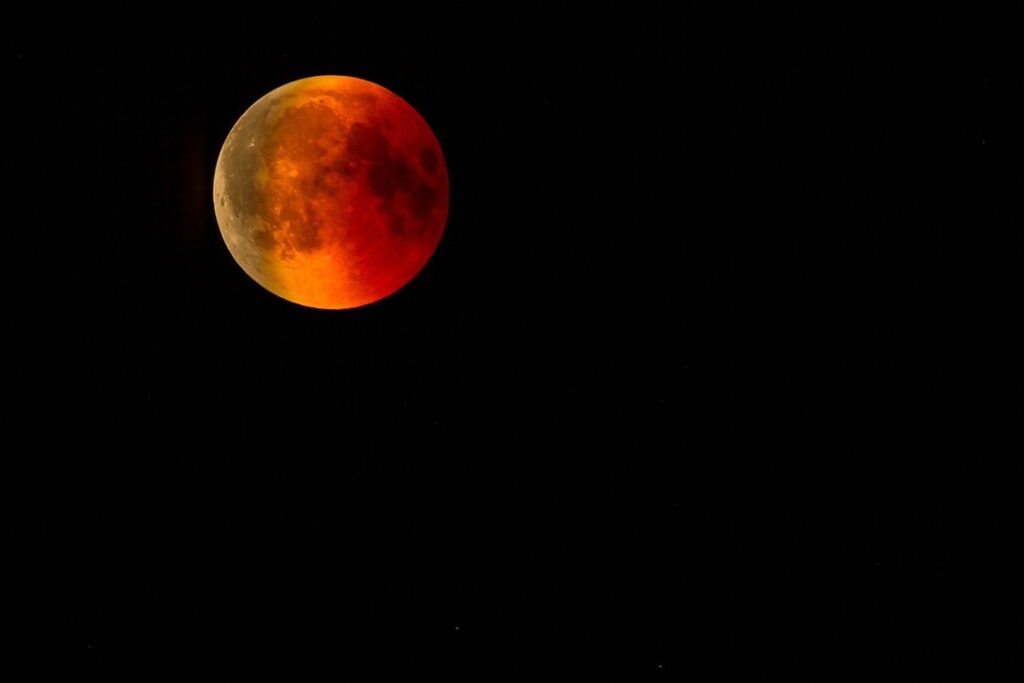
What is an Annular Eclipse?
An annular eclipse occurs when the Moon passes directly between the Earth and the Sun, but appears smaller than the Sun’s disk. This creates a ring of light around the Moon.
Definition and Types of Annular Eclipses
An annular eclipse is a type of solar eclipse where the Moon passes directly between the Earth and the Sun, but appears smaller than the Sun’s disk due to its elliptical orbit. This results in a ring of light around the Moon, rather than a complete obstruction of sunlight. There are two main types of annular eclipses: partial annular and total annular.
Partial annular eclipses occur when the Moon is at a farther distance from Earth, making it appear even smaller relative to the Sun’s disk. This type of eclipse appears as a ring of light around the Moon, but with a noticeable gap in the center. On the other hand, total annular eclipses are relatively rare and can only be seen from specific locations on Earth where the Moon is at its closest distance to our planet.
What distinguishes an annular eclipse from a total solar eclipse is the size of the Moon relative to the Sun’s disk. During a total solar eclipse, the Moon completely covers the Sun, creating a dramatic and awe-inspiring spectacle. In contrast, an annular eclipse produces a ring of light around the Moon, providing a unique and breathtaking sight for observers.
Frequency and Predictability of Annular Eclipses
Annular eclipses are relatively rare occurrences compared to other types of eclipses. According to NASA, about 40% of all solar eclipses are annular, while the rest are total eclipses. This is because an annular eclipse requires the Moon to be at a precise distance from Earth, called the “annularity distance,” which only occurs when the Moon is near its farthest point from Earth in its elliptical orbit.
To predict annular eclipses, astronomers rely on complex calculations and models that take into account various celestial factors. They use computer simulations to track the movements of the Sun, Moon, and Earth over thousands of years, looking for the specific alignment of these bodies that results in an annular eclipse. This process involves analyzing multiple factors such as lunar ellipticity, solar radius, and Earth’s slightly ellipsoidal shape.
Astronomers typically predict annular eclipses 5-10 years in advance using techniques like lunar-solar conjunctions and astronomical algorithms. However, these predictions are subject to some uncertainty due to the Moon’s irregular orbit and other celestial factors that can influence eclipse timing.
How an Annular Eclipse Occurs
An annular eclipse occurs when the Moon is at a farther distance from Earth, making it appear smaller in the sky and unable to cover the sun completely. We’ll examine this crucial detail further below.
The Path of Annularity
The path of annularity is a narrow region on Earth’s surface where the eclipse appears as an annulus, or ring. This path is determined by the Moon’s shadow falling directly on the Earth’s surface at the time of the eclipse. The shape of the path is typically a thin ribbon that can stretch for thousands of kilometers.
As the eclipse progresses, this narrow path moves across the globe, passing over specific locations where observers are treated to a spectacular view of the ringed eclipse. In some cases, the path may be quite narrow, making it appear as a sliver of annularity in the sky. For example, during the 2016 annular solar eclipse, the path of annularity was only about 70 miles wide at its maximum width.
The path of annularity is also influenced by the Moon’s orbit and the Earth’s rotation. This means that the path can shift slightly from one eclipse to the next due to these celestial mechanics. Knowing where the path of annularity will be located during an upcoming annular eclipse can help astronomers and sky gazers plan their viewing locations in advance.
Moon’s Orbit and Eclipse Alignment
For an annular eclipse to occur, a precise alignment of celestial bodies is necessary. The Sun, Moon, and Earth must be nearly aligned, with the Moon positioned between the Earth and the Sun. However, unlike during a total solar eclipse, the Moon’s orbit does not align perfectly with the Earth’s orbit around the Sun. As a result, the Moon appears slightly smaller than the Sun, creating a ring of light visible from the Earth.
This misalignment is due to the eccentricity of the Moon’s orbit. The Moon’s path around the Earth is elliptical, causing it to appear larger or smaller in the sky at different times. When the Moon is in its new phase and positioned near one of these points in its orbit, known as apogee, it appears even smaller. This alignment allows the annular eclipse to occur.
The exact timing and location of an annular eclipse depend on this precise alignment. Astronomers and eclipse enthusiasts carefully track lunar eclipses to predict when such a rare event will take place. For example, in May 2012, an annular solar eclipse was visible from parts of Asia, the Middle East, and Africa due to this specific celestial configuration.
Observing Annular Eclipses Safely
To ensure a safe and enjoyable viewing experience, it’s crucial to follow proper protocols when observing an annular eclipse. We’ll cover essential tips for witnessing these rare events without putting yourself or others at risk.
Preparing for the Eclipse
When observing an annular eclipse, preparation is key to ensure a safe and enjoyable experience. Start by selecting a location with a clear view of the horizon, free from any obstructions or distractions. Make sure you’re also aware of the weather forecast for the area – an overcast sky will block your view.
Choose proper eye protection specifically designed for solar viewing. Look for products that meet international safety standards (ISO 12312-2), such as solar viewing glasses or handheld solar viewers with a solar filter. These filters should have no holes, scratches, or other damage to prevent UV and infrared radiation from entering your eyes.
Before the eclipse begins, check your equipment and make sure it’s functioning properly. Familiarize yourself with the time of maximum eclipse and plan accordingly – some eclipses can be brief, so being prepared is essential. Lastly, consider bringing a chair or blanket to sit comfortably while observing the eclipse, as you’ll likely want to stay for its duration.
Eclipse Etiquette and Safety Tips
When observing an annular eclipse, it’s essential to follow basic etiquette and safety guidelines. First, respect others’ viewing areas: don’t obstruct their view or try to crowd into a single spot. This is particularly crucial when people are gathered at public viewing events.
You should also be mindful of noise levels during the eclipse. Avoid using loudspeakers or making excessive noise that might disturb nearby residents or disrupt local businesses. For example, consider the impact on nearby hospitals, which may need silence to perform sensitive medical procedures.
Another key aspect is parking and transportation: plan ahead to avoid congesting public roads or private property. Be aware of local regulations regarding access restrictions or parking permits during special events.
When observing an annular eclipse, it’s also crucial to respect daily life routines. Avoid disrupting school schedules or altering emergency service operations. Consider the needs of people who might be affected by your viewing plans, such as those living in areas with limited infrastructure. By taking these considerations into account, you can ensure a safe and enjoyable experience for both yourself and others.
History of Annular Eclipses
Annular eclipses have been a fascination for astronomers and stargazers alike, and understanding their history can help us appreciate the rarity of these celestial events. Let’s take a journey through time to explore the earliest recorded annular eclipses.
Ancient Observations and Records
Ancient civilizations left behind detailed records of annular eclipses, often interpreting them as omens or signs from the gods. The ancient Chinese recorded an annular eclipse in 2135 BCE during the Shang Dynasty. Similarly, the ancient Greeks noted several instances, including one in 413 BCE that occurred during a naval battle between Athens and Syracuse.
The Babylonians left behind cuneiform records of eclipses, which were often used to synchronize calendars. These observations show that annular eclipses were recognized as distinct from total eclipses, although their understanding of the phenomenon was not always accurate. The ancient Greeks believed an annular eclipse occurred when the Moon passed between the Earth and the Sun at a distance.
It’s worth noting that these early records often described the event in poetic or metaphorical terms. For example, the ancient Chinese poet Du Fu wrote about an annular eclipse as “the moon was torn apart”. This creative interpretation highlights the mystery and awe associated with annular eclipses throughout history.
Modern Eclipse Hunting
Modern eclipse prediction methods have revolutionized the field of astronomy. One notable example is the total solar eclipse that occurred on July 21, 2009, visible from India and parts of Asia. This event showcased the accuracy of modern eclipse predictions. The Saros cycle, a periodic pattern of eclipses, was used to forecast this occurrence.
In recent years, NASA’s Digital Globe satellite has significantly improved eclipse forecasting. Its high-resolution imagery allows for precise tracking of celestial bodies. For instance, the satellite captured clear images of the annular solar eclipse that occurred on May 20, 2012, visible from parts of North America.
NASA also utilizes sophisticated computer models to predict eclipses. These simulations consider atmospheric conditions and other environmental factors that can affect the visibility of an eclipse. The June 10, 2011, annular solar eclipse over the Middle East is a notable example of accurate prediction using these computer models.
Science Behind Annular Eclipses
An annular eclipse occurs when the Moon is at a farther point from Earth, creating a ring-like effect instead of blocking the Sun’s light completely. In this section, we’ll explore what makes these eclipses happen and their unique characteristics.
Solar Activity and Eclipse Frequency
Solar activity has a significant impact on the frequency of annular eclipses. During periods of high solar activity, such as those around solar maximum, the Sun’s corona becomes more prominent and extended, making it easier for Earth to pass through the Moon’s shadow. This leads to an increase in both total and annular eclipses. In fact, about 40% of all possible eclipses during a solar cycle are annular.
On the other hand, low solar activity periods result in fewer total eclipses but can still produce annular eclipses if the Moon is at the right distance from Earth. The frequency of annular eclipses varies depending on the lunar node cycles, with some nodes producing more annular eclipses than others. Understanding these patterns is crucial for astronomers and sky gazers to predict when and where an annular eclipse will occur.
While solar activity affects eclipse frequencies, it’s essential to remember that not all high-activity periods produce annular eclipses. The Moon’s distance from Earth also plays a critical role in determining the type of eclipse that occurs. A Moon at perigee (its closest point) can result in a total eclipse, while one at apogee (farthest point) may lead to an annular or partial eclipse.
Earth-Moon-Sun Alignment and Eclipse Types
The Earth-Moon-Sun alignment is critical for determining the type of eclipse. For a total solar eclipse to occur, the Moon must be close enough to the Earth to completely cover the Sun’s disk. However, if the Moon is at a farther distance from Earth, it will appear smaller in the sky and only partially cover the Sun. This partial coverage results in a partial solar eclipse.
An annular solar eclipse occurs when the Moon’s orbit brings it even farther away from Earth, causing it to appear significantly smaller than the Sun. As a result, the Moon cannot cover the entire Sun, leaving a ring of light visible around its edges. The path of annularity is usually narrow and covers a specific region on the Earth’s surface.
Understanding these alignments can help predict where an annular eclipse will occur. For example, during the 2017 total solar eclipse that crossed the United States, observers in parts of Oregon and Washington saw only a partial eclipse due to the Moon’s slightly farther distance from Earth at the time.
Witnessing an Annular Eclipse in Person
Witnessing an annular eclipse is a rare and thrilling experience that requires careful planning and attention to celestial alignment. You’ll learn how to spot the next annular eclipse in your area and what to expect from this awe-inspiring event.
Planning Your Eclipse Experience
To witness an annular eclipse, you’ll need to plan a trip or excursion carefully. The first step is to determine when and where the eclipse will occur. Annularity occurs within a narrow path on Earth’s surface, known as the path of annularity, so it’s essential to choose a location within this area.
Check NASA’s website for accurate information on the path of annularity and timing of the eclipse. You can also use online tools like TimeAndDate or Eclipse Wise to help plan your trip. Be aware that the path of annularity is typically around 100 miles wide, so you’ll need to ensure you’re within this narrow band.
Once you’ve identified a suitable location, research local accommodations and transportation options. Keep in mind that popular spots may fill up quickly, so book your travel arrangements well in advance. Consider staying overnight near the eclipse path to maximize viewing time, as annularity can last for several hours.
Photography and Capture Techniques
To capture high-quality images of an annular eclipse, you’ll need a camera with manual controls and a wide-aperture lens. A focal length between 200mm to 500mm is ideal for compressing the sun’s corona into a manageable size. For digital cameras, shoot in RAW mode to preserve maximum image data.
Your camera settings should prioritize high ISO sensitivity – typically around 800-1600. However, be cautious not to introduce excessive noise that can compromise your image quality. Exposure compensation may also be necessary, as the sun’s brightness can easily overpower your metering system. Bracket your shots to capture a range of exposures and later merge them in post-processing using HDR techniques.
Tripods are crucial for capturing sharp images during an eclipse. Look for a sturdy tripod with a smooth pan-and-tilt head, allowing you to track the moon as it moves across the sun’s disk. To minimize camera shake and maintain image quality, use a remote shutter release or the camera’s self-timer feature.
Frequently Asked Questions
What If I Missed an Annular Eclipse in Person?
Yes, annular eclipses can be viewed live online through websites that broadcast astronomical events. Some professional astronomers also share their observations and footage on social media platforms. You can also join online communities of astronomy enthusiasts to stay updated about upcoming eclipses.
How Can I Be Sure If the Path of Annularity Passes Over My Location?
To confirm whether an annular eclipse will be visible from your location, you should check NASA’s official website for the latest updates on eclipse paths and timing. Additionally, mobile apps designed for astronomy enthusiasts can provide real-time information about celestial events.
Can I Use Regular Sunglasses to View an Annular Eclipse Safely?
No, regular sunglasses are not sufficient eye protection during an annular eclipse. You need specialized solar viewing glasses or handheld solar viewers that meet international safety standards (ISO 12312-2) to directly observe the sun’s disk without risking serious eye damage.
Is It Worth Traveling to a Location Within the Path of Annularity If I’m Not Familiar with the Area?
Yes, witnessing an annular eclipse from within its path can be a life-changing experience. However, it requires careful planning and preparation. Before embarking on such a trip, research local accommodations, transportation options, and weather forecasts for your destination to ensure a smooth and enjoyable experience.
How Long After the Eclipse Event Should I Wait Before Removing My Protective Eyewear?
Wait until the eclipse has completely ended or you’re in a location where sunlight is no longer an issue. The sun’s brightness can be deceiving even after the eclipse, so it’s essential to prioritize caution when removing eye protection.