
Comet Hale-Bopp was one of the largest and brightest comets of the 20th century, captivating scientists and astronomers around the world with its unprecedented size and luminosity. Its discovery in March 1995 sparked widespread interest in science and astronomy, as experts scrambled to study this rare celestial event up close. What made Comet Hale-Bopp so remarkable was not only its enormous size, but also its unique composition, which provided valuable insights into the formation of our solar system. By studying this comet, scientists were able to gain a deeper understanding of the processes that shape planetary systems and the materials that make up comets. In this article, we’ll take a closer look at Comet Hale-Bopp’s record-breaking size and brightness, and explore how its discovery contributed to our understanding of comet composition and planetary formation theories, allowing you to learn more about this fascinating celestial body by the end of it.
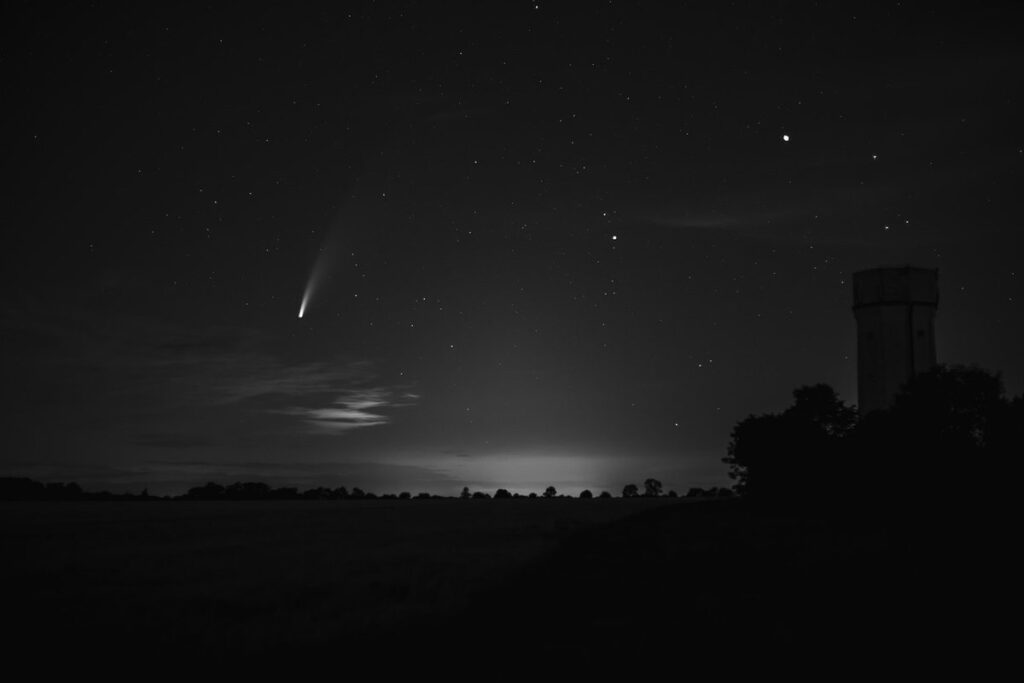
Discovery and Initial Observations
Comet Hale-Bopp was first spotted by astronomers on July 23, 1995, marking the beginning of a thrilling observational period for stargazers worldwide. Let’s take a closer look at how its discovery unfolded.
What is a Comet?
A comet is a celestial body composed primarily of ice, dust, and frozen gases. As it approaches the Sun, the comet’s ices begin to vaporize, releasing gas and dust into space. This process creates a bright tail of debris that can be seen from Earth, making comets visible to astronomers and sky gazers alike.
The composition of a comet is typically 90% ice, with water ice being the most abundant component. Other frozen gases, such as methane and ammonia, are also present in smaller amounts. The dust particles released by the comet range in size from tiny molecules to larger rocks.
When a comet’s icy surface is heated by the Sun’s radiation, the trapped gas is released into space. This phenomenon creates a cloud of gas and dust surrounding the comet, known as its coma. As the comet continues to approach the Sun, the coma grows larger, producing a spectacular display that can be seen from great distances.
It’s worth noting that not all comets are visible from Earth due to their distance or angle of approach. However, when a comet like Hale-Bopp passes close enough to our planet, its brightness and size make it impossible to ignore.
Hale-Bopp’s Unprecedented Discovery
The discovery of Comet Hale-Bopp on July 23, 1995, marked a significant moment in astronomical history. Two independent astronomers, Alan Hale and Thomas Bopp, independently spotted the comet using small telescopes, making it an unprecedented discovery. The simultaneous detection by multiple observers confirmed the comet’s existence and sparked widespread interest among scientists and the general public.
The fact that two separate individuals made the discovery, one in Arizona and the other in California, highlighted the global reach of modern astronomy. This achievement was also a testament to the power of amateur astronomers, as Hale and Bopp were not affiliated with any major research institutions at the time. Their observations were made possible by advanced technology and precise calculations, demonstrating how modern tools can facilitate groundbreaking discoveries.
The discovery of Comet Hale-Bopp caught many astronomers off guard, underscoring its significance in the scientific community. The comet’s subsequent visibility to the naked eye and its remarkable brightness captivated the public imagination, making it one of the most-watched celestial events of the 20th century.
Comet Hale-Bopp’s Orbital Path and Characteristics
Comet Hale-Bopp is known for its incredibly long orbital path, taking nearly 4,200 years to complete one full cycle around the sun. We’ll take a closer look at where this comet came from and how it behaves in our solar system.
Unique Orbital Pattern
Comet Hale-Bopp’s unique orbital pattern is a key factor in its exceptional brightness. With an eccentricity of 0.995, it has a highly elliptical path that takes it from the outer reaches of the solar system to within 1.315 astronomical units (AU) of the Sun. This close approach to the Sun, known as perihelion, is what makes Hale-Bopp one of the brightest comets in recorded history.
To put this in perspective, most comets have perihelia ranging from 0.5 to 1 AU from the Sun. However, Hale-Bopp’s proximity to the Sun allows it to absorb more solar energy, causing its comet nucleus to heat up and release a large amount of gas and dust into space. This process creates an incredibly active coma, which is responsible for the comet’s bright appearance.
The combination of Hale-Bopp’s highly eccentric orbit and close approach to the Sun makes it an ideal candidate for studying cometary activity and composition. Scientists can use observations of the comet’s behavior during perihelion to gain insights into its internal structure and the processes that occur as it approaches the Sun.
Large Size and Active Coma
Hale-Bopp’s massive size is a key factor in its remarkable appearance. Its nucleus, estimated to be around 30 kilometers in diameter, makes it one of the largest comets ever observed. To put that into perspective, the average comet nucleus is only about 10-15 kilometers wide. This enormous size allows Hale-Bopp to produce an incredibly large amount of gas and dust as it approaches the Sun.
As a result, its coma, or cloud of gas and dust, was visible for over a year in the night sky. The coma’s sheer size and brightness made it a spectacular sight, even for those with just binoculars or a small telescope. Amateur astronomers were thrilled to observe Hale-Bopp up close, while professional astronomers used its massive size to gather valuable data about cometary composition and behavior.
The combination of Hale-Bopp’s large size and active coma created an unparalleled viewing experience for comet enthusiasts worldwide. It’s worth noting that few comets can sustain such a long period of activity, making Hale-Bopp’s spectacle all the more remarkable.
Scientific Significance and Research Opportunities
The discovery of Comet Hale-Bopp has opened up new avenues for scientific study, from understanding cometary origins to exploring potential resources for future space missions.
Comet Composition and Formation Theories
Scientists analyzed Comet Hale-Bopp’s gas and dust emissions to gain insights into comet composition and formation theories. The study of its coma revealed a high concentration of organic compounds, including water vapor, methane, and ammonia. These findings have significant implications for our understanding of the solar system’s early days.
One theory is that comets like Hale-Bopp delivered these organic materials to Earth during the planet’s formation, potentially influencing life on our planet. This idea is supported by the discovery of cometary particles containing complex molecules, such as amino acids and sugars. These compounds are essential building blocks for life as we know it.
Comet formation theories suggest that Hale-Bopp originated from a cold, outer region of the solar system, where water and other volatile compounds accumulated in icy bodies. As these bodies collided or were perturbed into orbits bringing them closer to the Sun, they began to release their stored gases and dust, creating a bright coma visible from Earth.
The study of Comet Hale-Bopp’s composition has shed light on the processes that shape our solar system, providing valuable information for researchers studying planetary formation and astrobiology.
Implications for Planetary Science and Astrobiology
The study of Hale-Bopp significantly advanced our understanding of planetary science and astrobiology. One key takeaway is the insight it provided into the evolution of our solar system. The comet’s unique orbital pattern, which brought it closer to the Sun than Pluto, helped scientists refine theories about the formation and migration of gas giants. This new knowledge has implications for understanding the early stages of our solar system.
The discovery also shed light on the potential for life beyond Earth. Hale-Bopp’s coma was found to contain complex organic molecules, similar to those found in meteorites that have fallen to Earth. These findings support the idea that comets may have delivered building blocks of life to our planet billions of years ago. This concept challenges the traditional view that life arose solely on Earth and instead suggests a more interconnected universe.
Hale-Bopp’s study has also sparked interest in exploring other comets for signs of extraterrestrial life. As scientists continue to analyze data from this comet, they are refining their search parameters for similar targets. By studying Hale-Bopp, researchers have gained valuable insights into the possibilities and limitations of life in our solar system, paving the way for future discoveries.
Public Interest and Cultural Impact
Comet Hale-Bopp’s impact was far-reaching, extending beyond scientific curiosity to capture the hearts of artists, writers, and ordinary people around the globe. Its cultural significance is still celebrated today through various forms of expression.
Media Frenzy and Scientific Community
The massive media attention surrounding Comet Hale-Bopp’s appearance in 1997 was unprecedented. Newspapers and magazines devoted extensive coverage to the comet’s journey across the sky, with many featuring large photographs and detailed explanations of its orbital path. The public’s fascination with the comet led to a surge in phone calls and inquiries to observatories and space centers worldwide.
The scientific community welcomed this opportunity to study Hale-Bopp up close. Astronomers from various countries collaborated on research projects, taking advantage of the comet’s proximity to Earth. Scientists were particularly interested in studying Hale-Bopp’s coma, which was visible to the naked eye, providing a unique chance to observe a comet’s gas and dust particles.
The media frenzy surrounding Hale-Bopp also raised awareness about comets and their importance in understanding our solar system. Many educational programs and events were organized to help the public understand the science behind comets. The widespread interest sparked by Hale-Bopp’s appearance had a lasting impact, promoting greater public engagement with astronomy and space exploration.
Artistic Expressions and Symbolism
The comet’s appearance in 1997 sparked a surge of creative expressions across various mediums. Musicians like Sting and Tori Amos wrote songs inspired by the celestial event, while authors such as Don DeLillo and Michael Ondaatje explored its symbolism in their works. Visual artists also found inspiration in Hale-Bopp’s majesty, creating paintings, sculptures, and installations that captured its ethereal beauty.
The comet’s significance extended beyond artistic expression, resonating with people across cultures and disciplines. It became a symbol of wonder, awe, and transformation, reflecting the human desire to connect with something greater than ourselves. The comet’s appearance coincided with significant events in world history, including the death of Princess Diana and the collapse of the Soviet Union, further solidifying its status as a harbinger of change.
The symbolism of Hale-Bopp was not limited to its connection to major life events; it also spoke to people on a personal level. Many saw it as a reminder of the mysteries that lie beyond human comprehension, evoking feelings of humility and reverence. The comet’s impact on popular culture was profound, inspiring countless works of art that continue to be celebrated today.
Comparison with Other Notable Comets
Comet Hale-Bopp was a behemoth among comets, but how does it compare to other notable ones? We’ll pit Hale-Bopp against some of its closest competitors in this next section.
Historical Significance and Brightness
Hale-Bopp’s exceptional brightness and prolonged visibility made it a standout among recorded cometary events. Its peak magnitude of 0.5, as measured by astronomers, is significantly brighter than other notable comets like Halley’s Comet and Hyakutake. While Halley’s Comet has an average magnitude of around 4.2, making it only visible to the naked eye for a short period, Hale-Bopp remained bright enough to be seen without binoculars or a telescope for over five months.
To put this into perspective, if you were to observe the sky on consecutive nights in March 1997, you would have witnessed a comet that was approximately 100 times brighter than the stars in the constellation of Andromeda. This remarkable brightness not only captivated the public’s imagination but also provided astronomers with an unparalleled opportunity for research and observation.
Astronomers were able to study Hale-Bopp’s composition and structure in greater detail due to its exceptional brightness, leading to new insights into cometary science. The comet’s prolonged visibility allowed researchers to collect data over a longer period, enabling them to better understand the dynamics of cometary activity.
Impact on Science and Society
The study of Hale-Bopp has had a profound impact on our understanding of cometary science. Its passage near Earth provided scientists with a unique opportunity to gather valuable data and insights into comet composition, structure, and behavior. Researchers used advanced instruments to collect extensive observations, which revealed new information about the formation and evolution of comets.
One key area of discovery was the presence of complex organic molecules in Hale-Bopp’s coma. These findings have significant implications for planetary science and astrobiology, as they suggest that comets may have played a crucial role in delivering building blocks of life to early Earth. The data collected from Hale-Bopp also contributed to a better understanding of comet atmospheres and the processes that govern their behavior.
The appearance of Hale-Bopp in the skies had an equally profound impact on society. Its sheer size and brightness made it a spectacle unlike any other, captivating the imagination of people around the world. As scientists continued to study the comet, they were able to share their discoveries with the public, promoting a greater understanding and appreciation for the wonders of the universe.
Legacy and Continued Research
As we wrap up our exploration of Comet Hale-Bopp, let’s take a moment to consider its lasting impact on astronomy and what researchers have learned from this remarkable celestial event.
Ongoing Studies and Future Prospects
Ongoing studies of Comet Hale-Bopp are exploring its unique composition, particularly the presence of complex organic molecules and dust particles. Researchers are using advanced spectrographic techniques to analyze the comet’s emission spectra and gain insights into its formation and evolution. One notable aspect of these studies is the investigation of Hale-Bopp’s coma, which was observed to be remarkably active and persistent.
Scientists are also examining the comet’s orbital patterns in greater detail, seeking to understand the implications for our understanding of the solar system. By comparing Hale-Bopp’s orbit with those of other comets, researchers can identify commonalities and differences that shed light on the diverse origins and behaviors of these celestial objects. Additionally, ongoing studies are investigating the potential connections between cometary impacts and mass extinctions on Earth.
Future research prospects include continued analysis of Comet Hale-Bopp’s composition and orbital patterns, as well as comparisons with other notable comets such as Halley’s Comet and Comet Shoemaker-Levy 9. These studies will not only enhance our understanding of comets but also contribute to a broader appreciation for the complexities of the solar system.
Educational Opportunities and Public Engagement
The study of comets like Hale-Bopp offers a unique opportunity for students to gain hands-on experience with astronomical research. Many educational institutions took advantage of Hale-Bopp’s approach by incorporating it into their curricula, allowing students to participate in citizen science projects and contribute to the understanding of this remarkable comet.
One notable example is the Comet Hale-Bopp Observing Program, which provided a structured framework for amateur astronomers to collect data on the comet’s brightness, color, and shape. This collaborative effort not only helped scientists better understand Hale-Bopp but also introduced students to scientific inquiry and critical thinking skills.
For professionals, Hale-Bopp presented a chance to refine their research techniques and develop new methods for studying comets. The wealth of data collected during this period has since been used in various studies on comet composition, formation theories, and orbital patterns. By continuing to explore the legacy of Comet Hale-Bopp, researchers can foster a deeper understanding of our solar system’s dynamics and encourage public engagement with science through accessible educational opportunities.
Frequently Asked Questions
Can I see Comet Hale-Bopp in the sky today?
Yes, unfortunately not. Comet Hale-Bopp was visible from Earth for over a year after its discovery in 1995, but it has long since disappeared beyond the outer reaches of our solar system. However, you can still observe other comets and learn about their orbits to appreciate these celestial bodies.
What if I missed Comet Hale-Bopp’s peak brightness? Can I expect another comet to appear soon?
While we can’t predict with certainty when or where a new comet will appear, astronomers continue to monitor the skies for potential cometary events. Keep an eye on astronomy news and websites like NASA or the European Space Agency for updates on upcoming comet sightings.
How does Comet Hale-Bopp’s composition contribute to our understanding of planetary science?
Comet Hale-Bopp’s analysis revealed insights into the formation and delivery of organic materials to Earth, providing valuable information about the solar system’s evolution. By studying comets like Hale-Bopp, scientists can better understand how planets formed and what conditions are necessary for life to emerge.
Can I use Comet Hale-Bopp as an example in my school project or presentation on astronomy?
Yes! Comet Hale-Bopp is a great case study for teaching students about cometary science, orbital patterns, and the scientific significance of such events. You can use its discovery, orbit, and composition as examples to illustrate key concepts and principles in astronomy.
What if I want to delve deeper into comet research? Are there any recommended resources or courses for beginners?
While there may not be specific courses on Comet Hale-Bopp itself, you can explore online resources from reputable institutions like NASA, the European Space Agency, or universities with strong astronomy programs. Look for introductory courses or tutorials on astrophysics and planetary science to get started.