
The full moon has long been a phenomenon that captivates us with its sheer power. You might be wondering, do you know when the next full moon is? Understanding this lunar event can have a profound impact on our daily lives. The full moon’s influence extends far beyond just tides, as it also affects human behavior and emotions. Many people believe that during a full moon, energy is at its peak, allowing us to tap into its transformative power for personal growth and spiritual development. In this article, we’ll explore the significance of the full moon, its impact on our surroundings, and how to harness its energy to unlock new potential within ourselves. By the end of reading this piece, you’ll be able to plan your activities according to the lunar cycle and tap into the full moon’s energizing effects for enhanced personal growth.
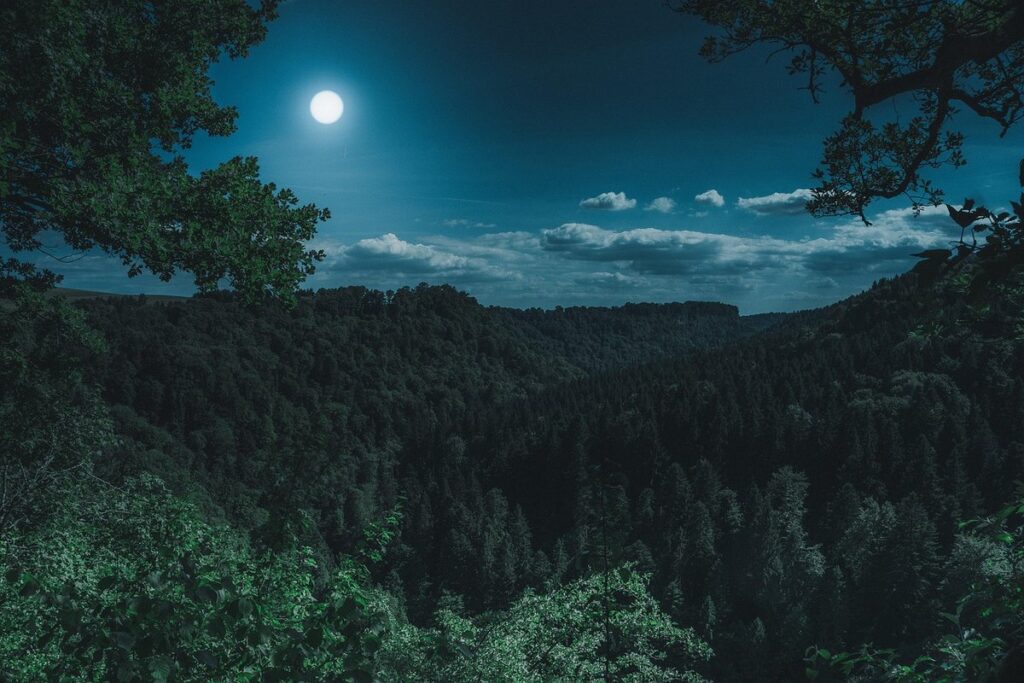
What is a Full Moon?
A full moon occurs when the entire face of the moon is illuminated by the sun, making it visible all night long. Let’s explore what makes this lunar phenomenon so special.
Definition and Characteristics
A full moon occurs when the Moon is on the opposite side of the Earth from the Sun. This alignment causes the entire face of the Moon to be illuminated by the Sun’s light, making it fully visible from our planet. The key characteristic of a full moon is that we can see its complete disk in the night sky.
Several factors contribute to this phenomenon. The Moon orbits the Earth at an angle of about 5 degrees relative to the Earth-Sun plane. As it moves through its orbit, different amounts of its illuminated surface are visible from our planet. When the Moon reaches the point opposite the Sun in the sky, we see its fully lit side.
A full moon can be distinguished by several characteristics. Its brightness is typically much greater than that of a quarter moon or crescent moon, making it stand out in the night sky. The shadow cast by the Earth on the Moon during this phase is also significant, with the entire illuminated surface of the Moon being visible.
Phases of the Moon
The full moon phase is a culmination of the lunar cycle’s eight distinct phases. To understand how the full moon fits into these phases, let’s break down each one:
- New Moon: The first phase marks the beginning of a new lunar cycle. It occurs when the moon is positioned between the Earth and the sun.
- Waxing Crescent: As the moon moves away from the new moon phase, it appears to grow larger in the sky, increasing in brightness.
- First Quarter (or Half-Illuminated Moon): The light half of the moon is now visible, with the right half illuminated.
- Waxing Gibbous: The moon continues its growth, appearing more than half-full but not yet full.
The full moon phase occurs when the entire face of the moon is illuminated by the sun’s light. This typically happens 14 days after the new moon phase. During this time, the moon appears at its brightest and fullest. After the full moon, the phases begin to reverse: waning gibbous, last quarter (or half-illuminated), and so on.
Understanding these lunar cycles is essential for tracking when a full moon will occur.
Why is the Full Moon Important?
The full moon has been a significant event throughout human history, influencing various cultures and societies. In many ancient civilizations, the full moon was considered a sacred time for spiritual practices, rituals, and ceremonies. For example, the ancient Greeks associated the full moon with the goddess Selene, while the Native Americans revered it as a symbol of fertility and abundance. This cultural significance has been carried forward to modern times, with many people continuing to observe traditional practices during the full moon.
In addition to its cultural importance, the full moon has also had an impact on modern society. It has inspired art, literature, and music, with many works created specifically in response to the full moon’s unique energy. For instance, the famous “Moonlight Sonata” by Beethoven was written under the light of a full moon. Furthermore, the full moon has been linked to increased creativity, inspiration, and emotional highs, making it a popular time for artists, writers, and musicians to create.
The full moon also plays a role in modern festivities, with many events and celebrations taking place during this time. From music festivals to full moon parties, people come together to honor the lunar cycle and its transformative power.
Lunar Cycle and Full Moon Timing
The full moon timing is intricately tied to the lunar cycle, which consists of eight distinct phases that govern its appearance in the night sky. Let’s break down these phases to understand when we can expect a full moon.
Understanding the Lunar Cycle
The lunar cycle is a natural phenomenon caused by the relative positions of the sun, earth, and moon. As the earth rotates on its axis, different amounts of the moon’s illuminated surface are visible from our planet, resulting in the distinct phases we observe. The cycle begins with the new moon phase, where the side of the moon facing the earth is not illuminated by the sun. This occurs when the moon is positioned between the sun and the earth.
As the moon moves through its orbit, it becomes increasingly illuminated by the sun’s rays, eventually reaching the first quarter phase. At this point, half of the moon’s illuminated surface is visible from earth. The full moon phase follows, where the entire illuminated side of the moon is facing our planet, and finally, we reach the last quarter phase.
Understanding these relationships can help you better grasp the lunar cycle and its impact on various aspects of life. For example, during a new moon, it’s common for people to set intentions and plan for the upcoming month, as the energy is often associated with renewal and fresh starts.
Calculating Full Moon Dates
Calculating full moon dates requires a combination of traditional astrology and modern astronomical techniques. One method is to use an ephemeris, a table of celestial bodies’ positions over time. This allows you to calculate the exact date and time of the full moon with high accuracy.
Another approach is to use software or online tools that account for various factors such as lunar declination, right ascension, and solar longitude. These programs can provide precise calculations and even offer visual representations of the lunar cycle. For example, some apps display a lunar calendar, showing the phases of the moon alongside corresponding dates.
Astrologers often use specific rules to determine full moon dates. One popular method is to calculate the exact moment when the moon is 180 degrees opposite the sun in declination, which typically occurs around the middle of the lunar cycle. By considering multiple approaches and accounting for various influences, you can become more confident in your ability to accurately predict full moon dates.
Effects of the Lunar Cycle on Tides
The lunar cycle has a profound impact on tides around the world. One of the most notable effects is the relationship between full moon and high tide. During a full moon, the gravitational pull of the Moon on the Earth’s oceans is at its strongest, causing a higher high tide and lower low tide. This phenomenon is known as the “spring tide,” which occurs when the Sun’s gravity also pulls in the same direction as the Moon’s.
The full moon’s gravitational force can cause sea levels to rise by up to 1 meter (3.3 feet) above the normal level, leading to coastal flooding and erosion. In some areas, the increased tidal range can be a concern for residents living in low-lying coastal communities. For example, during the 2004 Indian Ocean tsunami, the full moon’s gravitational pull was amplified by the Earth’s rotation, resulting in a devastatingly high tide.
To understand the effects of the lunar cycle on tides, it’s essential to note that not all full moons have the same impact. The Moon’s orbit is elliptical, which means its distance from the Earth varies throughout the month. When the Moon is at its closest point (called perigee), its gravitational pull is stronger, leading to even higher high tides and lower low tides.
Tidal ranges can vary significantly depending on the location. In some areas, like the Bay of Fundy in Canada, the tidal range is as high as 16 meters (52 feet) due to a combination of the Moon’s gravitational pull and the shape of the coastline.
Impact of Full Moon on Human Behavior
Research suggests that the full moon has a profound effect on human behavior, influencing everything from emotions and energy to decision-making and actions. We’ll examine these intriguing connections in more detail next.
Folklore and Superstition
The full moon has long been associated with madness, crime, and chaos in folklore and superstition. This widespread perception is often attributed to the ancient Greeks, who believed the full moon caused “lyssa,” or rabies-like behavior in humans. Many cultures have similar legends, with some linking the full moon to increased aggression, erratic behavior, and even supernatural events.
In medieval Europe, for example, the full moon was seen as a time when wolves became more aggressive and people were more prone to madness. This association has persisted in modern folklore, with many still believing that the full moon is linked to bizarre occurrences and lawless behavior. While there’s no scientific evidence to support these claims, they remain an intriguing aspect of lunar mythology.
Some researchers suggest that this superstition may have originated from observing real-world phenomena, such as the increased activity of predators during a full moon or the heightened risk of accidents and crimes in areas with limited lighting. However, these factors are likely coincidental rather than causational, and more research is needed to fully understand the relationship between the full moon and human behavior.
Scientific Studies on Lunar Influence
Researchers have explored the relationship between the full moon and human behavior through various studies. A 2004 meta-analysis published in the journal “Perceptual and Motor Skills” found a small but significant increase in emergency room admissions during full moons, suggesting a link between lunar cycles and human behavior. However, this study’s findings were later disputed due to methodological flaws.
A more recent study from 2016 investigated the effect of the full moon on sleep patterns. Researchers discovered that participants experienced lighter, less restorative sleep during full moon phases compared to new moon phases. The study suggested that lunar cycles may influence circadian rhythms and sleep quality.
Other studies have examined the impact of the full moon on emotions and physical activity. A 2018 survey of healthcare professionals found that a significant minority reported an increase in patient anxiety and agitation during full moons. In contrast, some research suggests that the full moon can stimulate creative expression and physical activity, with many artists and athletes reporting increased productivity and energy during these periods.
These findings indicate that while the relationship between the full moon and human behavior is complex and not fully understood, there may be a link between lunar cycles and various aspects of human experience.
Cultural Significance and Celebrations
The full moon has captivated human imagination across cultures and centuries. From ancient rituals to modern-day celebrations, its significance is deeply ingrained in various societies. In Japan, for example, the Tsukimi festival honors the full moon with traditional poetry readings and sake drinking. Similarly, in India, the Purnima festival celebrates the full moon’s arrival with music, dance, and offerings to the gods.
In many indigenous cultures, the full moon is a time for storytelling and sharing of traditions. In some African tribes, it marks the beginning of the harvest season, while in others, it signals the end of a cycle and the start of a new one. The full moon has also inspired art and literature throughout history, with numerous poets and writers drawing inspiration from its luminescence.
To tap into this cultural significance, consider exploring traditional festivals and rituals in your community or country of origin. You may be surprised at the depth of meaning and symbolism attached to the full moon. By embracing these customs and traditions, you can deepen your own connection to the lunar cycle and appreciate its far-reaching impact on human culture and experience.
Full Moon in Astrology
The full moon plays a significant role in astrology, marking a time of completion and celebration in the lunar cycle. Let’s take a closer look at how it affects us on an emotional and spiritual level.
Understanding Lunar Houses and Signs
In astrology, lunar houses and signs play a crucial role in understanding the full moon’s influence on personality and life events. The lunar houses refer to the 12 segments of the zodiac wheel, each associated with specific areas of life such as relationships, career, or home life. When a full moon occurs in a particular house, it can bring attention to that area of your life.
The lunar signs, also known as the moon’s nodal axis, are the points where the moon’s orbit intersects with the ecliptic (the sun’s path). The north node represents growth and opportunities, while the south node represents past patterns and habits. When a full moon falls near one of these nodes, it can indicate a shift in energies or a call to let go of old patterns.
For example, if you have a natal chart with your north node in Leo and the full moon occurs in Aquarius (a sign associated with Leo), this may bring attention to your creative pursuits or self-expression. Understanding lunar houses and signs can help you tap into the full moon’s energy and make the most of its influence on your life.
Interpreting Full Moon Transits
Interpreting full moon transits through different astrological signs requires an understanding of how each sign’s energies interact with the lunar cycle. When a full moon occurs in Aries, for instance, its expansive and impulsive energy can amplify feelings of restlessness and impulsiveness. In contrast, a Cancer full moon brings attention to emotional needs and family dynamics.
To interpret these transits, consider the sign’s characteristics and how they align with your personal life. Ask yourself: Are you feeling overwhelmed or energized by the current situation? Which areas of your life are being highlighted or challenged? Aries can bring tension and conflict, while Cancer can prompt self-reflection and nurturing.
The full moon in Leo can spark creativity and self-expression, whereas a Scorpio full moon may intensify emotions and inner conflicts. Pay attention to how these transits resonate with your individual chart, especially if you’re familiar with astrology. For those new to the practice, consider consulting an astrological guide or chart printout for more insight.
When working with full moon transits in various signs, remember that each sign brings its unique energies and themes. By tuning into these influences, you can better navigate life’s challenges and seize opportunities.
Using Astrology for Personal Growth
Using the full moon’s energy to promote personal growth requires a deeper understanding of its astrological significance. When a full moon occurs, it activates specific houses and planets in an individual’s birth chart, amplifying their energies. To tap into this potential, you can work with the transiting full moon by examining which house or planet is being highlighted.
For instance, if the full moon is in Leo, it may illuminate issues related to self-expression, creativity, and personal pride. You can use this energy to confront areas where you feel stifled or uncertain about your individuality. Conversely, a full moon in Scorpio may bring up intense emotions surrounding intimacy, power dynamics, or emotional secrecy.
To make the most of these transits, reflect on your birth chart and identify which planets are being affected by the full moon’s light. Consider journaling, meditation, or engaging in activities that resonate with the activated energies. This might involve creative pursuits, setting boundaries, or exploring themes related to relationships and intimacy. By aligning yourself with the full moon’s astrological influences, you can harness its power for personal growth, self-awareness, and spiritual development.
Practical Applications of Full Moon Knowledge
Now that you understand the basics of full moon phases, let’s explore how you can apply this knowledge to enhance your daily life and make the most of each lunar cycle.
Planning and Preparation
To plan and prepare for the full moon’s peak energy, consider setting aside time for reflection and intention-setting. Start by identifying areas of your life where you’d like to see growth or change. This could be related to relationships, career goals, or personal habits. Write down these intentions clearly, making sure they’re specific and achievable.
During the full moon’s peak energy, engage in activities that promote release and renewal. These might include burning sage or sweetgrass for a ritual cleansing, writing letters (even if you don’t intend to send them) to symbolize letting go of negativity, or participating in a group meditation focused on releasing old patterns.
You can also use this time for creative pursuits like art, music, or writing. Allow yourself to tap into the full moon’s energy and express yourself freely. This can be a powerful way to channel its influence into your life. By incorporating these practices into your routine, you’ll be better equipped to harness the full moon’s power and make the most of its opportunities for growth and transformation.
Harnessing Full Moon Energy
Harnessing the full moon’s energy can be a powerful way to amplify your creative pursuits, personal growth, and spiritual development. During this time, the increased lunar radiation is believed to heighten emotional awareness, intuition, and psychic abilities. Many people use this energy to tap into their subconscious mind, allowing for deeper insights and connections.
To harness full moon energy, try incorporating activities that promote creativity and self-reflection, such as meditation, journaling, or practicing yoga. You can also engage in creative pursuits like painting, writing, or music-making, as the full moon’s influence is thought to enhance artistic expression.
Some practical tips for tapping into full moon energy include:
- Setting clear intentions before the full moon, and then reflecting on your progress afterwards
- Using a lunar calendar to plan your activities around the full moon phases
- Incorporating moon-related symbols or imagery into your art or writing
By acknowledging and aligning with the full moon’s cycles, you can tap into its transformative power and experience personal growth, increased creativity, and spiritual renewal.
Full Moon in Everyday Life
The full moon’s energy can be harnessed to improve daily routines. For instance, planning meals around the lunar cycle can have a significant impact on digestion and appetite. Many people find that they experience increased hunger during the full moon phase, making it essential to prepare nutritious meals in advance. This might involve batch cooking or meal prepping on the day before the full moon.
In addition to meal planning, work schedules can also be adjusted to align with the lunar cycle. Some individuals report feeling more energetic and productive during the full moon, while others experience a natural dip in energy levels. By recognizing these patterns, you can plan your tasks accordingly, tackling more challenging projects when you’re at your most energized.
When it comes to sleep schedules, some people find that they have difficulty falling asleep or experiencing restless nights during the full moon phase. This is often due to increased activity and stimulation, making it essential to establish a calming pre-sleep routine. Practicing relaxation techniques, such as meditation or deep breathing exercises, can help regulate your body’s natural rhythms and promote better sleep quality.
Incorporating these subtle changes into your daily life can have a profound impact on overall well-being, allowing you to tap into the full moon’s transformative energy with greater ease.
Frequently Asked Questions
How to Plan for Every Full Moon Cycle
Yes, it is possible and beneficial to plan for every full moon cycle. By doing so, you can stay attuned to the lunar energies and make the most of its potential for personal growth and spiritual development. Create a calendar or planner that marks each full moon date and plan activities, rituals, or practices that align with your goals and intentions.
Can I Use Astrology for Full Moon Planning if I’m a Beginner?
Yes, you can use astrology to plan for full moon even if you’re a beginner. Start by understanding the basic principles of lunar houses and signs in astrology, which are explained in the article. Then, learn how to interpret the full moon’s transit through different astrological signs and use this information to set intentions and make decisions.
How Do I Know When the Full Moon is at Its Peak Energy?
The full moon’s peak energy usually occurs on the night of its exact opposition, which can be calculated using various methods explained in the article. However, a general rule of thumb is to plan your activities or rituals for the evening before or the morning after the exact opposition.
What if I Miss a Full Moon Cycle – Can I Still Harness Its Energy?
Yes, you can still harness the full moon’s energy even if you miss its peak cycle. The article explains how to use astrology to tap into the full moon’s potential for personal growth and spiritual development. Use this knowledge to plan activities or rituals that align with your goals and intentions, and you’ll be able to make the most of the lunar energies.
Can I Use Full Moon Energy for Any Kind of Activity?
While the full moon is often associated with creative pursuits, personal growth, and spiritual development, its energy can also be harnessed for more practical activities like planning, decision-making, or problem-solving. The key is to understand how to align your intentions and actions with the lunar energies, which requires some knowledge of astrology and lunar cycles.