
Observing an eclipse is a once-in-a-lifetime experience that has captivated humans for centuries. These rare events have inspired both wonder and fear, with cultures around the world imbuing them with spiritual significance. Whether you’re a seasoned astronomer or simply someone who appreciates the beauty of celestial phenomena, viewing an eclipse can be a truly transcendent experience. However, it’s not just about showing up at the right place and time – safety is paramount when gazing directly at the sun during an eclipse. In this article, we’ll guide you through the essential steps for safely observing eclipses, from choosing the perfect location to mastering advanced photography techniques that allow you to capture these fleeting moments in stunning detail.
Understanding Eclipses
Eclipses have captivated humans for centuries, and understanding their mechanics is key to fully appreciating these rare celestial events. Let’s explore the basics of what causes an eclipse.
What is an Eclipse?
An eclipse occurs when one celestial body moves into the shadow of another. This can happen between a planet and its moon, or between two larger bodies like Earth and the Moon. There are two main types of eclipses: lunar and solar.
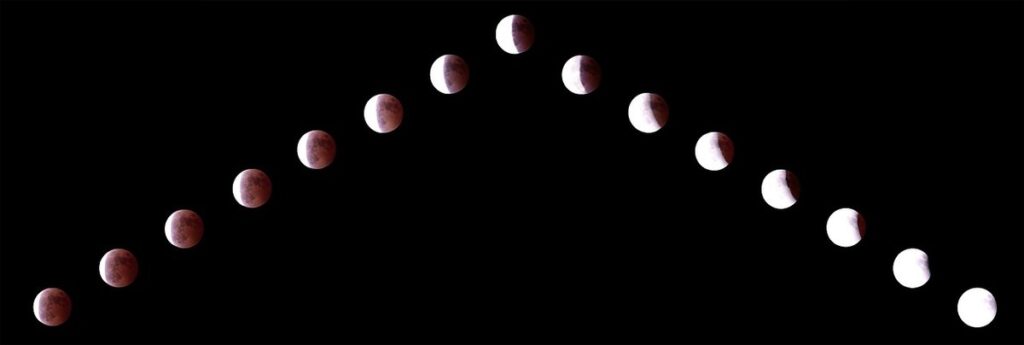
Lunar eclipses occur when the Earth’s shadow falls on the Moon. The Earth blocks the sunlight that normally reflects off the Moon’s surface, causing the Moon to darken. This can result in a range of colors, from deep reds to dark browns, depending on the amount of dust and debris in the Earth’s atmosphere.
Solar eclipses occur when the Moon passes directly between the Sun and the Earth. The Moon’s shadow has two parts: the umbra, which is the darker inner region, and the penumbra, which is lighter outer region. During a solar eclipse, only observers within the narrow path of totality can see the entire umbra.
Eclipses are relatively rare because the Earth, Sun, and Moon must be aligned in a straight line, which only happens during new moon phases. This alignment is also why eclipses seem to occur at regular intervals – they follow predictable cycles that astronomers have identified as the Saros cycle and the Metonic cycle.
Types of Eclipses: Lunar vs Solar
Lunar eclipses occur when Earth passes between the Sun and the Moon, blocking the sunlight that normally reflects off the Moon’s surface. This type of eclipse is visible from anywhere on the planet where the Moon is above the horizon. Lunar eclipses are relatively rare because the Moon’s orbit is tilted at an angle of about 5 degrees relative to Earth’s orbit around the Sun.
Solar eclipses, on the other hand, occur when the Moon passes directly between the Sun and a specific location on Earth, blocking the Sun’s light. These eclipses are only visible from a narrow path on Earth, known as the path of totality, where the observer is in the direct shadow of the Moon. The path of totality is usually about 100 miles wide and covers a specific region of the planet.
There are three types of solar eclipses: partial, annular, and total. A partial eclipse occurs when the Moon only partially blocks the Sun’s light, while an annular eclipse appears as a ring of light around the Moon. Total eclipses, which are the rarest type, occur when the Moon completely covers the Sun’s disk.
If you’re planning to observe a solar eclipse, it’s essential to be within the path of totality or use specialized eye protection to view the partial phases safely.
Eclipse Cycles: Saros and Metonic Cycles
Eclipse cycles are a crucial aspect of predicting eclipses. Two of the most significant cycles are the 18-year Saros cycle and the 19-year Metonic cycle. The Saros cycle is an exact repeat of an eclipse’s path on Earth, while the Metonic cycle is based on the lunar month.
The Saros cycle accounts for the Earth’s rotation, the tilt of its axis, and the Moon’s elliptical orbit. As a result, eclipses within this cycle will have similar characteristics, such as their timing, duration, and visibility from specific locations. For example, a total solar eclipse visible in one location 18 years ago will be visible in a different location on Earth during the next Saros cycle.
The Metonic cycle is based on the lunar month’s 29.5-day cycle and accounts for the Moon’s phases. It predicts eclipses that occur approximately every 19 years, with some exceptions due to leap months. This cycle helps astronomers predict when lunations (new moon or full moon) will align with specific Earth-Moon-Sun alignments.
Both cycles are essential tools for predicting eclipses accurately. Understanding these cycles can help you anticipate the timing and visibility of future eclipses, allowing you to plan your eclipse viewing events more effectively.
Preparing for an Eclipse Viewing Event
Before you head out to catch a glimpse of the celestial spectacle, make sure you’re prepared for a safe and enjoyable eclipse viewing experience. That starts with knowing what to bring and how to get there.
Choosing a Safe Location
When selecting a safe location for viewing an eclipse, it’s essential to consider several factors. First, choose a spot with minimal light pollution, as this will allow you to see the eclipse in all its glory. A location away from cities and urban areas is ideal, but if you’re in a more populated area, look for spots with unobstructed views, such as parks or open fields.
Another crucial consideration is accessibility. Ensure that your chosen location is easily accessible by foot or car, and that there are no hazards such as steep slopes or bodies of water nearby. It’s also important to be aware of your surroundings during an eclipse event, as the excitement can lead people to move around more than usual.
Some popular locations for viewing eclipses include national parks, wildlife refuges, and public viewing events organized by local astronomy clubs. These areas often provide a safe and accessible environment for viewers to enjoy the eclipse. When choosing a location, be sure to check the weather forecast beforehand and have a backup plan in case of unexpected changes.
Essential Safety Gear: Eyewear and Observing Tips
When viewing a solar eclipse, it’s crucial to have the right safety gear to protect your eyes. Handheld solar viewers with proper certification are an excellent option. Look for devices that meet international safety standards, such as ISO 12312-2. These viewers should have a solar filter that reduces the sun’s brightness to a safe level.
Pinhole projectors are another popular choice for viewing eclipses without direct eye exposure to the sun. To use one effectively, position it so that the sun is at an angle with the pinhole, casting a projected image on a surface behind the projector. The projected image will show the eclipse in reverse, but safely.
When using either of these tools, remember to follow basic observing tips: never look directly at the sun through the viewer or projector without proper eye protection, and avoid looking away from the device for more than 5 seconds. This can cause temporary blindness due to the intense light.
Some handheld solar viewers also have a built-in timer that alerts you when it’s safe to remove your eyes from the device. Be sure to check if your viewer has this feature or use an external timer as a precaution.
Tips for Successful Eclipse Viewing
To make the most of your eclipse viewing experience, follow these essential tips that will help you prepare and capture the perfect shot. From finding the right location to using the right equipment.
Timing is Everything: Understanding Eclipse Phases
When observing a solar eclipse, it’s crucial to understand the different phases that occur. The initial contact, also known as first contact, marks the beginning of the eclipse, where the moon starts to cover the sun’s disk. This is usually a brief moment, lasting around 30 seconds to a minute. As the moon continues to move in front of the sun, the partial phase begins. During this time, about 20-30% of the sun’s surface is obscured by the moon.
The next phase is called the annulus, or ring of fire, where the sun appears as a bright ring around the dark disk of the moon. This is often the most spectacular part of the eclipse, but it’s also the shortest phase, typically lasting only a few minutes. The maximum duration of an eclipse occurs when the path of totality reaches its widest point.
Keep in mind that these phases are not simultaneous for observers outside the path of totality. If you’re watching from within this narrow region, you’ll witness the entire sequence of events. However, if you’re observing from elsewhere, you’ll see only partial eclipses at specific times during the event.
Weather Considerations: How to Plan Around Meteorological Uncertainty
When it comes to eclipses, weather can be a major wild card. Forecasting is often challenging due to unique atmospheric conditions created during an eclipse event. High and low clouds can move in quickly, reducing visibility or blocking the sun entirely. To mitigate these risks, carefully monitor local forecast models at least three days before the eclipse date. Look for signs of changing weather patterns, such as increased cloud cover or temperature fluctuations.
If bad weather is forecasted, consider alternative locations with more favorable conditions. Check if nearby parks, observation decks, or higher elevations have a better chance of clear skies. Be aware that these areas may also attract larger crowds, potentially making it harder to find a safe viewing spot. On the day of the eclipse, stay flexible and be prepared to adjust your plans quickly. Have a backup location in mind, and be willing to move if necessary.
In extreme cases, consider watching the eclipse on live stream or through online coverage from clear-sky locations. Some media outlets and astronomy organizations provide high-quality live feeds during major events. This way, you can still experience the excitement of an eclipse while ensuring your safety in unpredictable weather conditions.
Advanced Eclipse Viewing Techniques
For experienced viewers, mastering advanced techniques can elevate your eclipse-watching experience. We’ll cover expert methods for optimal viewing conditions and observations.
Solar Projection Methods: Building Your Own Pinhole Projector
To safely observe the sun during an eclipse without specialized equipment, you can create a pinhole projector at home. This simple device allows the sun’s image to be projected onto a surface, enabling viewers to watch the eclipse while avoiding direct eye exposure.
First, find a small, cylindrical object with a tiny hole drilled into one end – such as a tin can or a film canister. If you don’t have this, you can also use a pin or a needle to create a small hole in a piece of cardboard. Next, cover the other end with a white sheet of paper or a screen.
Place the object so that the sun’s image is projected onto the surface behind it. You can then move the object around to adjust the focus and get a clear image. This method allows you to observe the eclipse safely from indoors, while also providing an interesting way to explore the phenomenon.
Astrophotography During an Eclipse
When photographing an eclipse, it’s essential to consider the unique challenges of capturing high-quality images during this fleeting event. One critical aspect is understanding how to set up your camera equipment for optimal results.
For astrophotography during an eclipse, use a DSLR or mirrorless camera with manual focus and manual exposure control. Set your ISO between 100-400 to minimize noise and maintain image quality. Aperture priority mode (A/Av) is usually the best choice, as it allows you to adjust the aperture for optimal depth of field while maintaining a suitable shutter speed.
Tripod placement plays a vital role in achieving sharp images. Position your camera at least six inches away from any reflective surfaces or obstructions, and ensure the camera’s axis aligns with the eclipse path. A sturdy tripod will prevent camera shake caused by hand movement, allowing for sharper images even during the brief totality phase.
Some key camera settings to keep in mind include:
- Using a wide-angle lens (between 10-24mm) to capture the entire eclipse sequence
- Setting your white balance to “Cloudy” or “Shade” to mimic natural light conditions
- Activating Continuous Autofocus (AF-C) mode for smooth focus tracking during the eclipse
Special Considerations: Accessibility and Inclusivity
When it comes to witnessing a celestial event like an eclipse, ensuring everyone can participate is crucial. This section focuses on making eclipse viewing accessible for people of all abilities.
Accessible Viewing Locations: Improving Public Spaces for Eclipses
When creating universal viewing areas during an eclipse event, public spaces must be designed with accessibility in mind. This includes considerations for people with mobility impairments and those who require sign language interpretation or audio descriptions. A small percentage of municipalities have implemented successful initiatives to improve public spaces for eclipses.
One example is the installation of ramps or gentle slopes leading up to viewing areas, allowing wheelchairs and mobility aids to easily access the space. These ramps can also serve as seating areas for spectators who need a place to rest during extended periods of eclipse viewing.
Another solution involves providing audio descriptions and sign language interpretation services at public viewing locations. Some events have even employed “touch tour” experiences where visitors with visual impairments can explore eclipse-themed exhibits through tactile means. This inclusivity not only enhances the overall experience for spectators but also fosters a sense of community among diverse attendees.
Cultural Significance of Eclipses Across the Globe
Eclipses have been a source of awe and reverence across cultures for centuries. In ancient China, eclipses were seen as omens of good fortune, while in some African societies, they’re believed to signal the transition between seasons. The Hopi people of North America view eclipses as times when the balance of nature is disrupted, requiring rituals to restore equilibrium.
In many Indigenous cultures, solar eclipses are associated with the sun’s journey through the underworld, and the temporary darkness is seen as a symbolic return of the sun’s power. For example, in Inuit mythology, the sun is said to be swallowed by a great dog during an eclipse, only to be reborn when it emerges from the darkness.
Similarly, lunar eclipses have been imbued with spiritual significance across various cultures. In Hinduism, a lunar eclipse is believed to be a time for prayer and penance, as it’s seen as a moment when the moon, a symbol of purity, is temporarily obscured by the earth’s shadow.
Frequently Asked Questions
Can I use a camera lens to project the sun safely?
Yes, using a solar filter or a pinhole projector is still the safest option for observing the sun during an eclipse. Camera lenses can cause serious eye damage if used without proper protection.
How do I deal with unexpected weather changes during an eclipse event?
Be prepared to adapt your plans by checking local weather forecasts frequently before and during the event. If bad weather approaches, consider moving to a backup location or adjusting your viewing schedule accordingly.
Can I create my own solar viewer using materials from home?
Yes, you can make a simple solar viewer using a cardboard box, aluminum foil, and a pinhole. This DIY approach allows for safe observation of the eclipse without specialized equipment. Just be sure to follow proper construction guidelines.
Is it possible to capture high-quality astrophotography during an eclipse if I’m not experienced with photography?
While experience helps, you can still achieve great results by following general tips such as using a sturdy tripod, adjusting your camera settings for optimal exposure, and paying attention to lighting conditions. Practice makes perfect, so don’t be discouraged if it takes some trial and error.
What should I do if I’m viewing an eclipse in a location with limited accessibility?
Prioritize your safety above all else. Look for accessible viewing areas or consider moving to a more accessible location. If you’re observing from home, ensure that you have clear sightlines without any obstructions.